

Rome, 4 views of Circuses (horse/charriot racing), Vatican, Piazza Navone, Giacomo Lauro, 1625, Circus Neronis in Vaticano.../De Circo Florae in Regionae Hortor Salustii/Circus Agonalis/Circus Flaminius
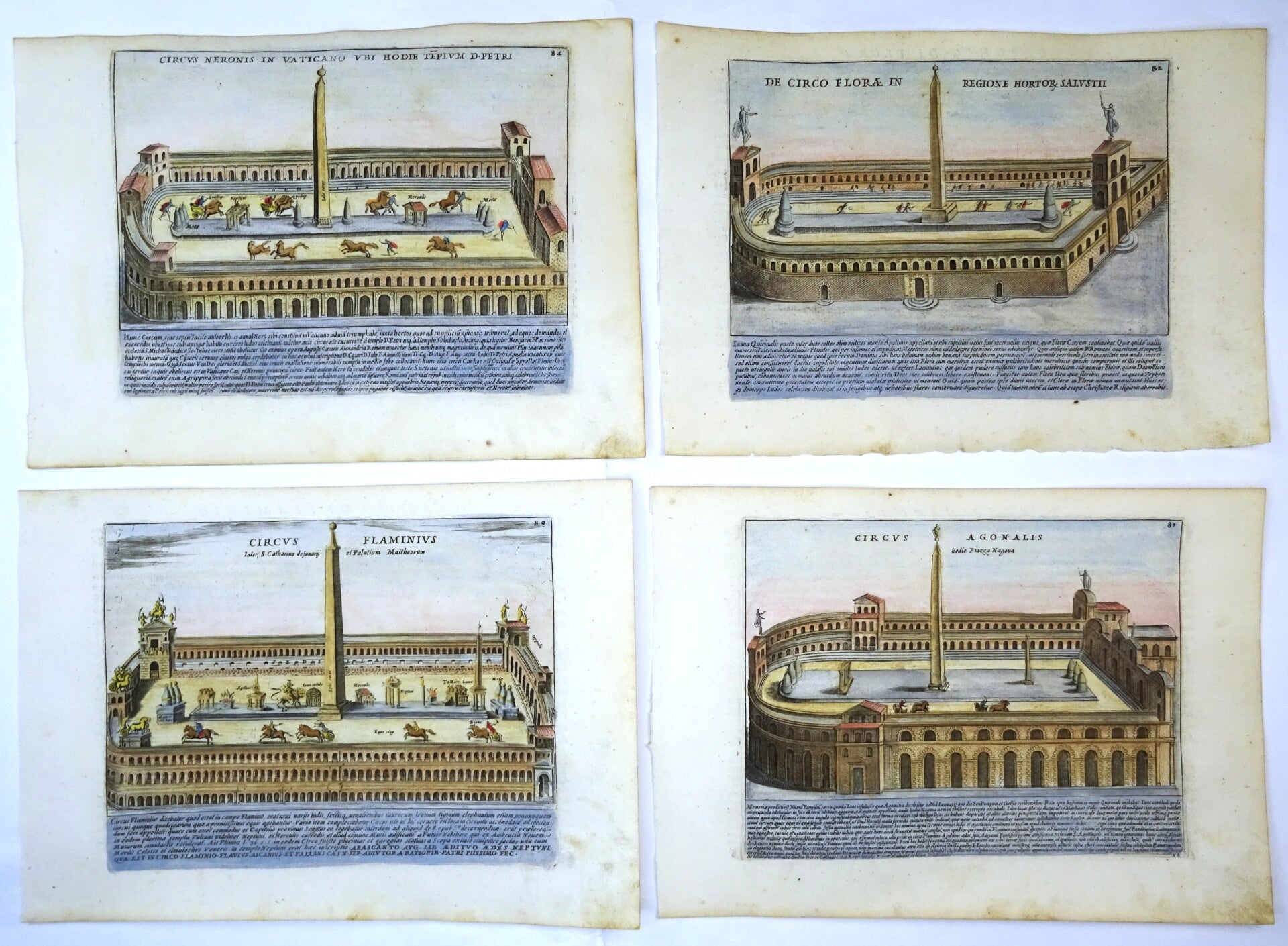
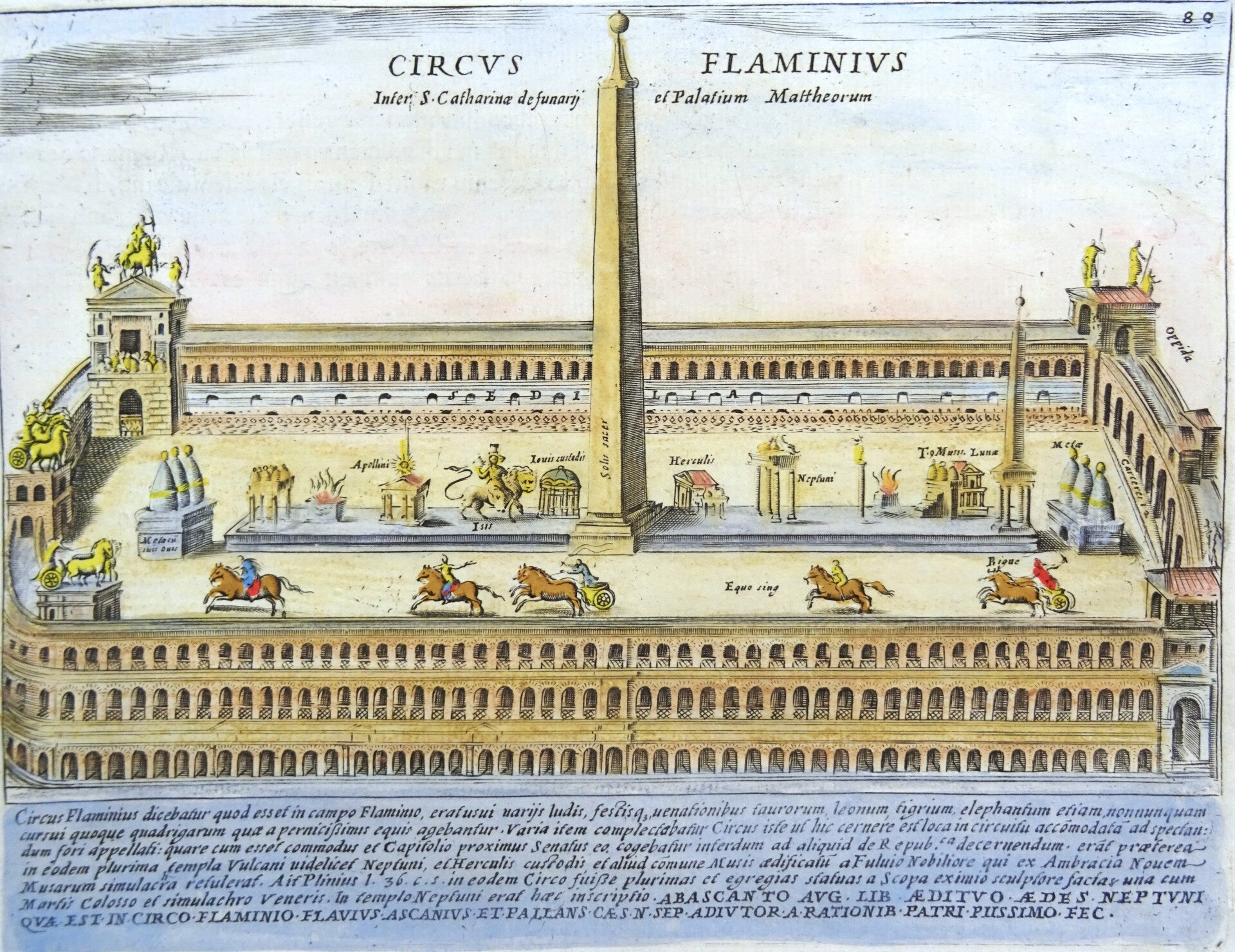
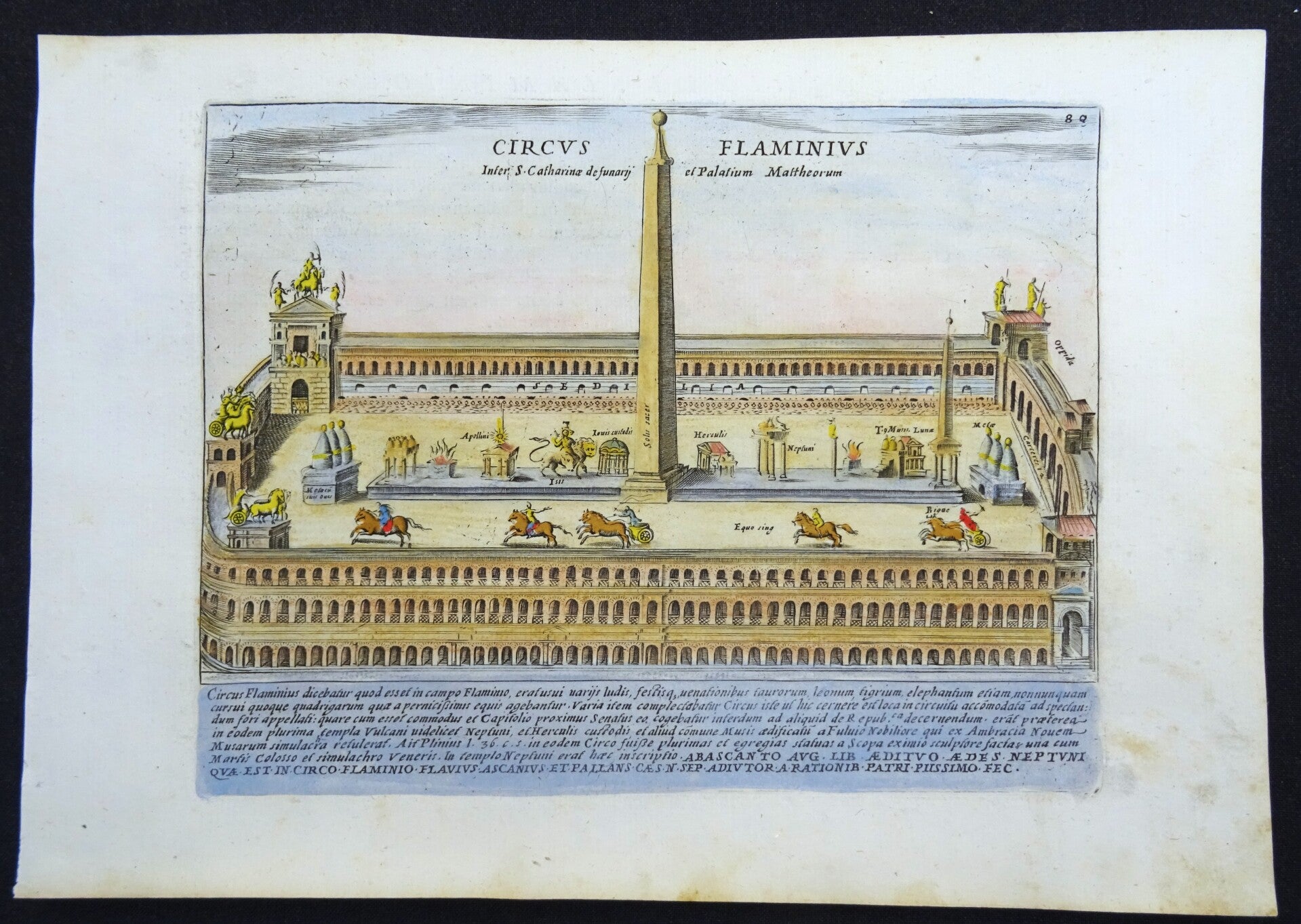
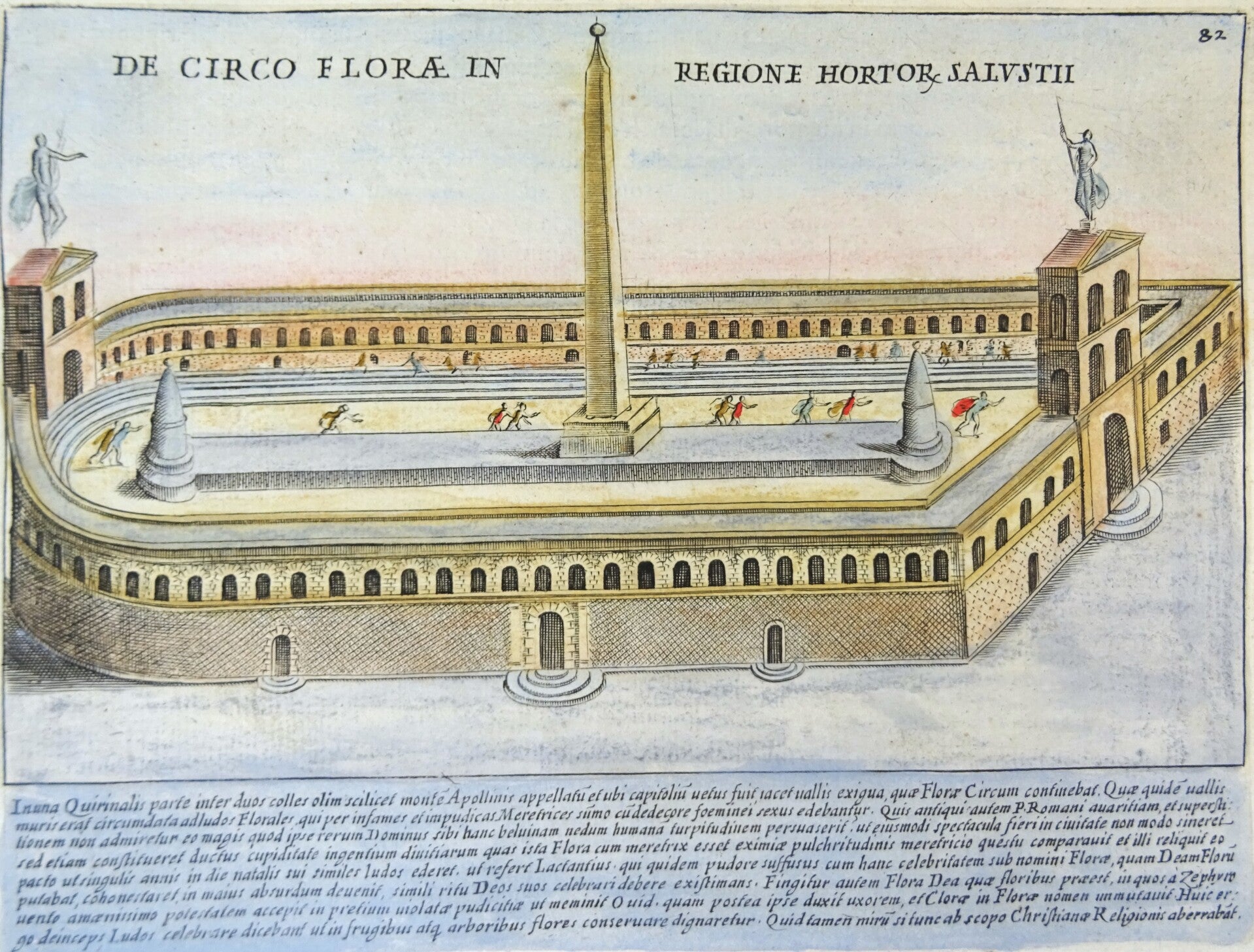
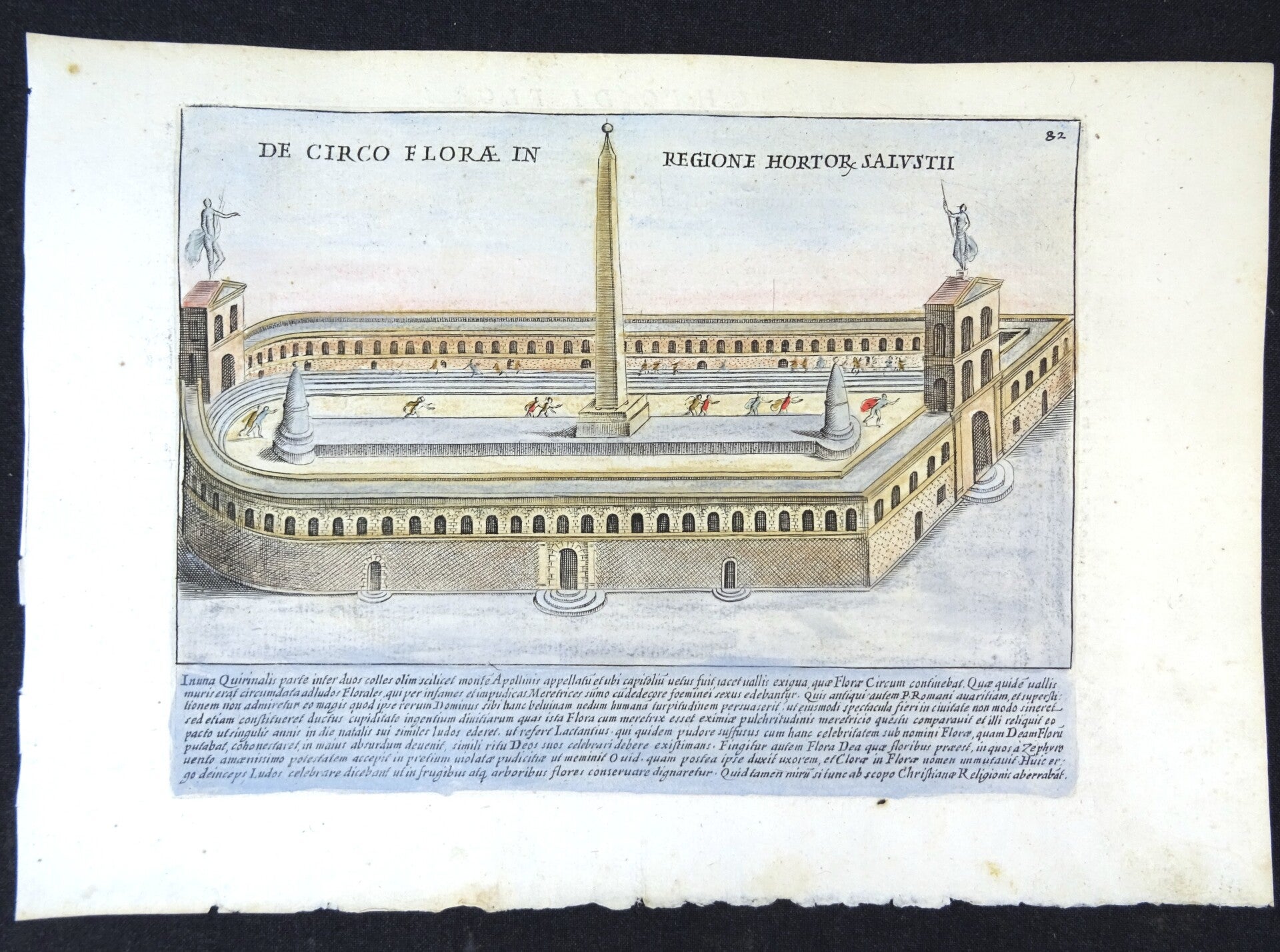
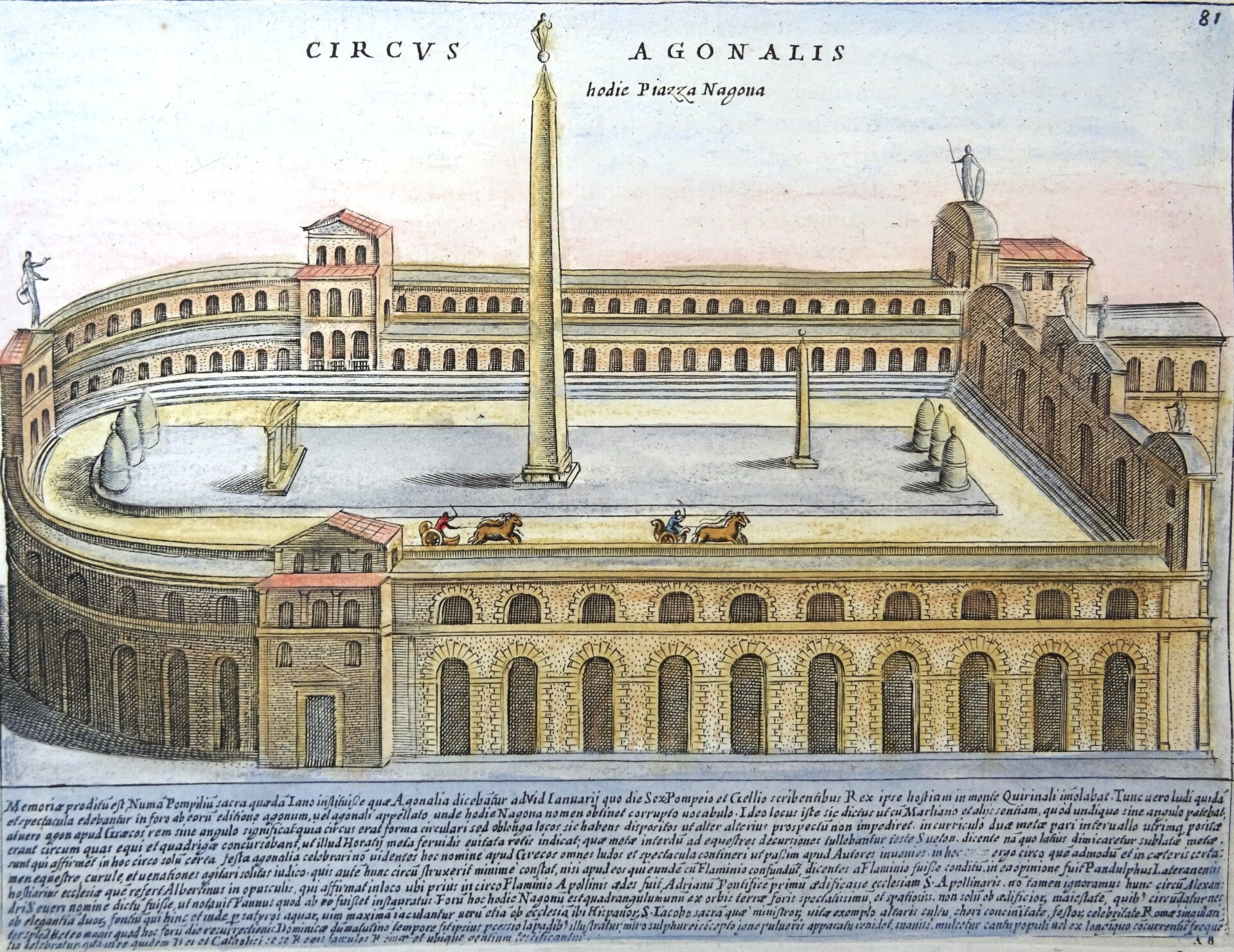
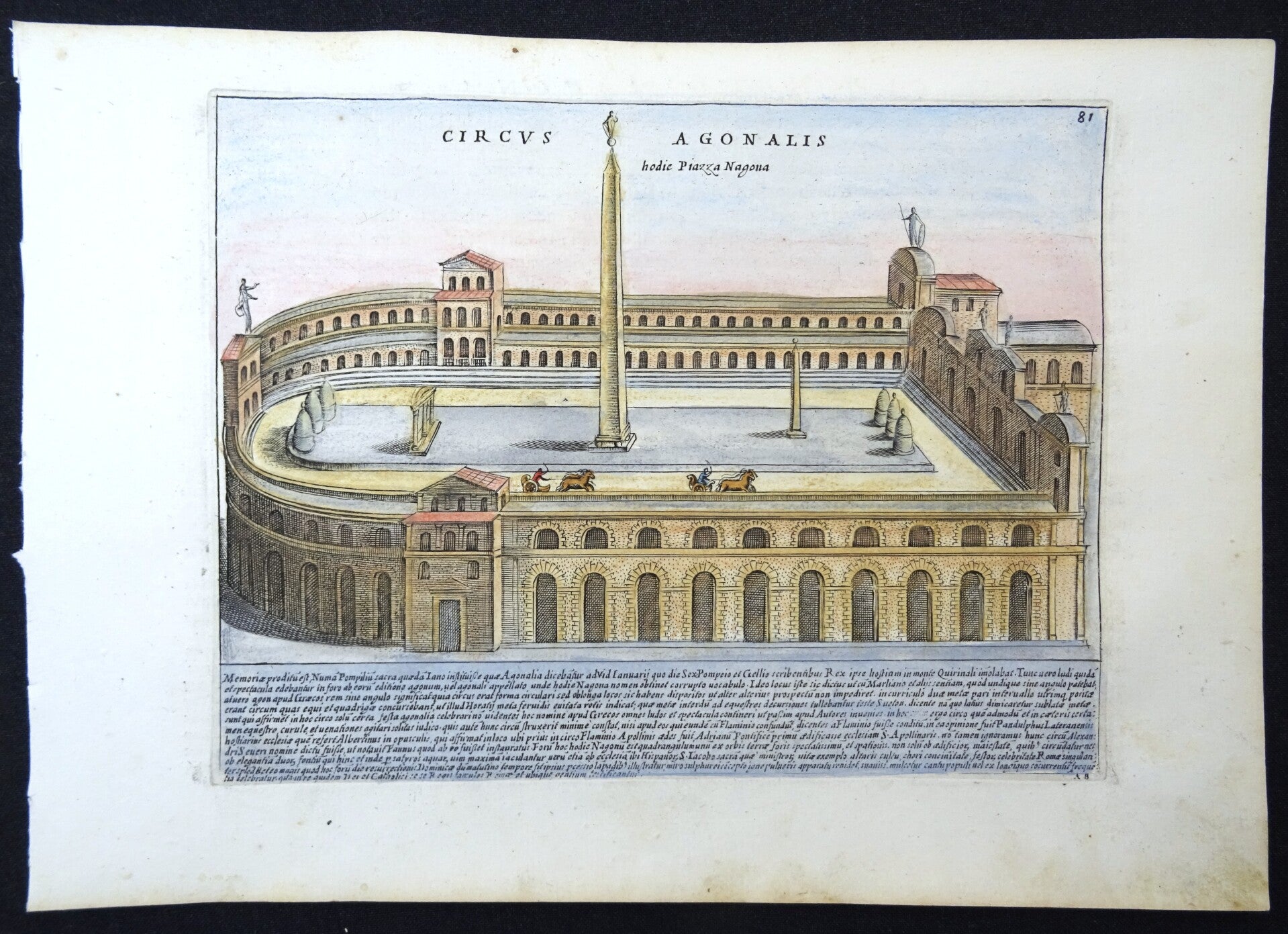
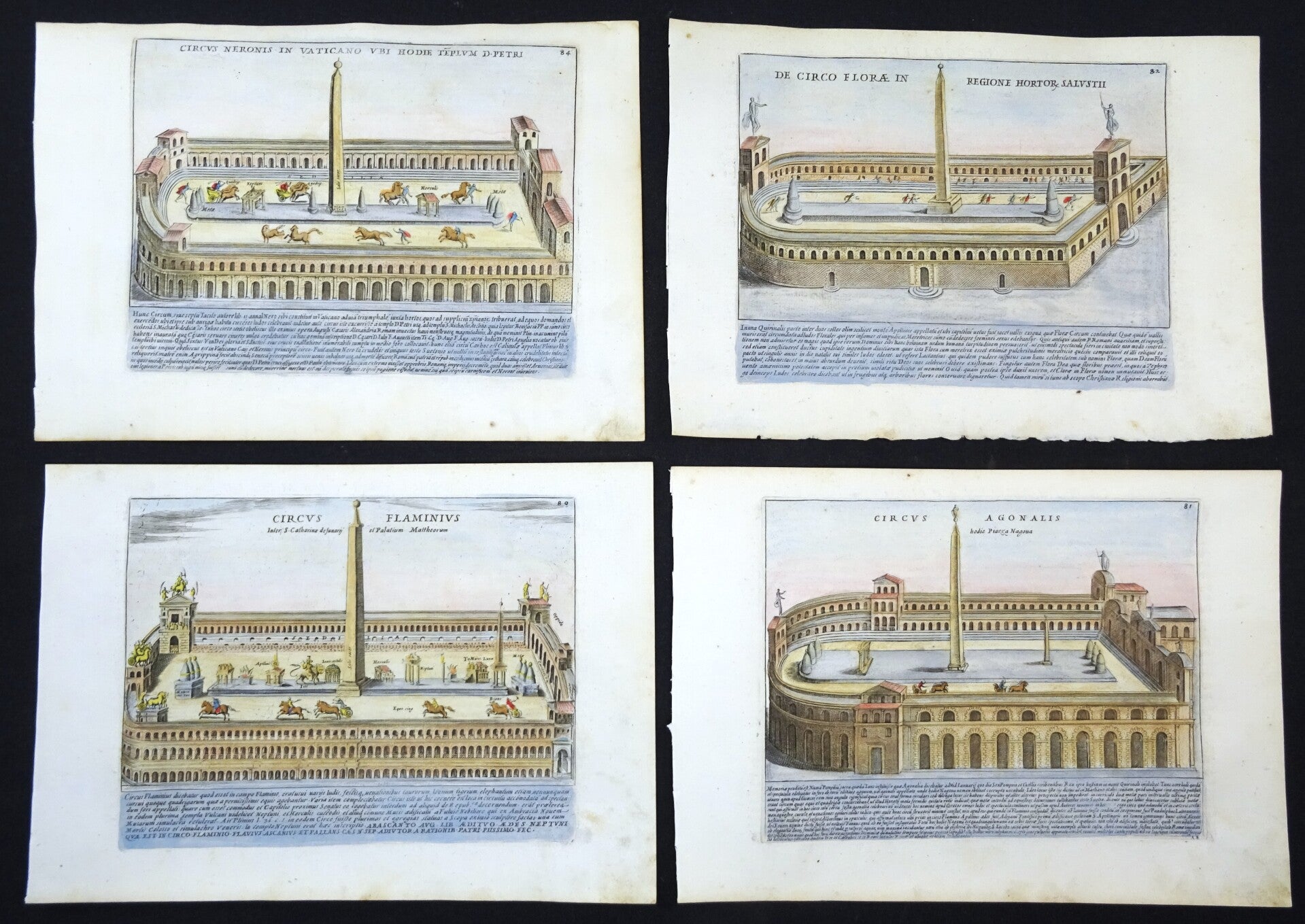
Four views of circuses (for horse and/or charriot racing) in Rome as they were in Antiquity.
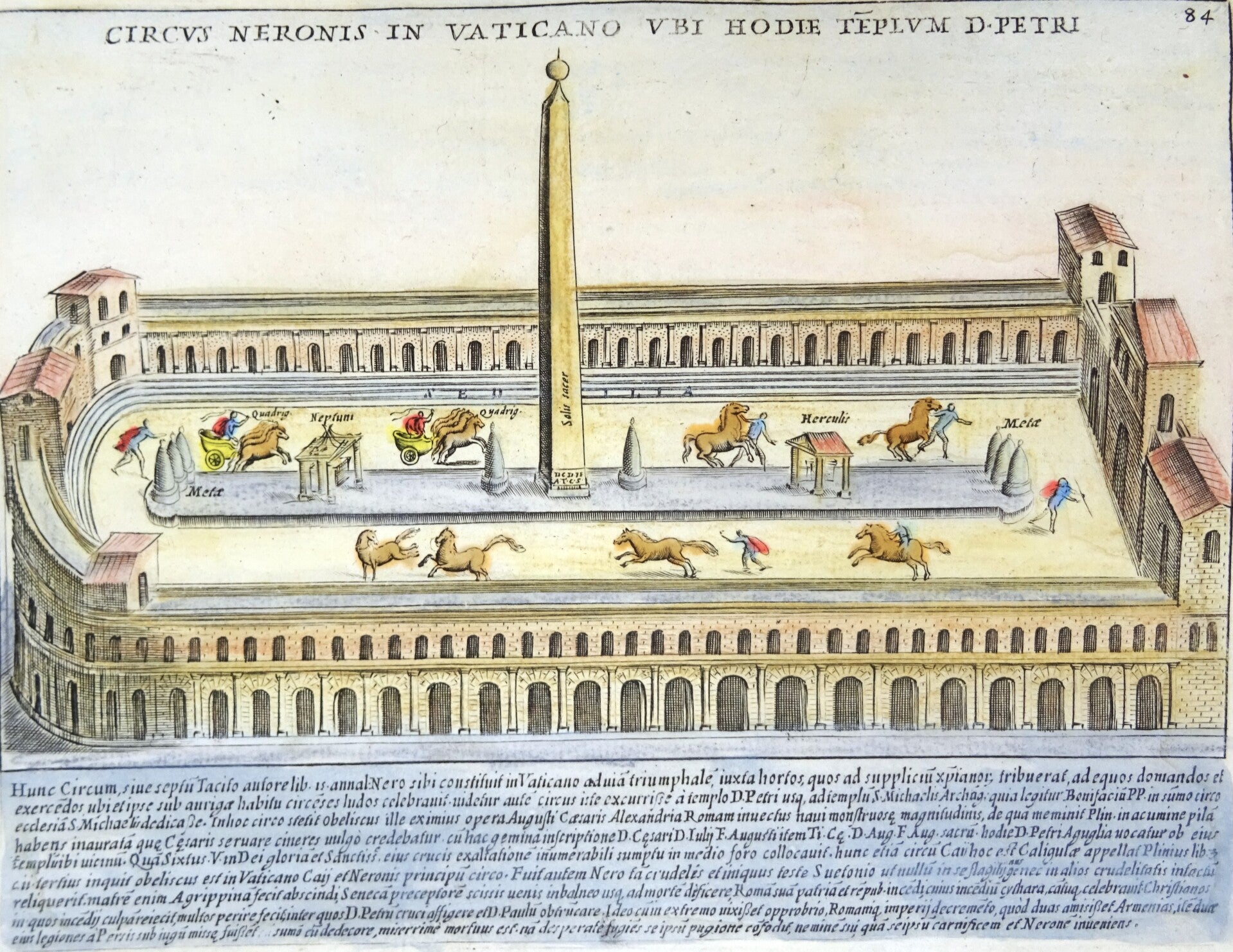
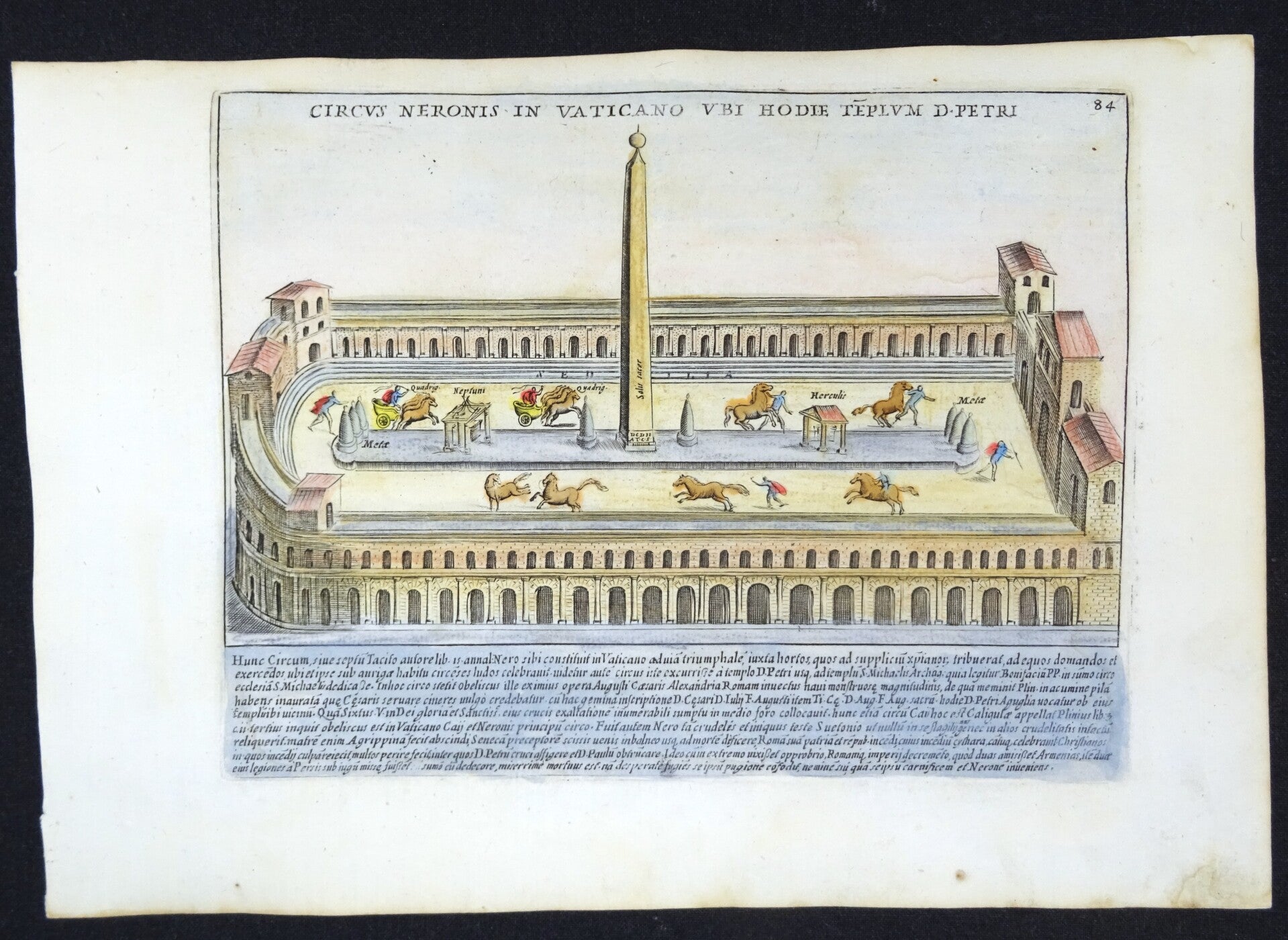
1. Circus Neronis in Vaticano…: The Circus of Nero was built beginning around 40 AD. Gaius (Caligula) and Nero were both participants in races. Caligula placed an obelisk in the circus that is now in the middle of St. Peter's Square. The circus is often credited to both Gaius and Nero. After the fire during Nero's reign, many thought that Nero had ordered the fire. He may have deflected the blame on to Christians, who were then martyred in the circus. Saint Peter is one who died there and his tomb is in the area. Constantine erected the basilica (Old St. Peter's) on the site and included the tomb and part of the Circus of Nero structure.
2.The Circus Flora in Sallustio. The Horti Sallustiani was a luxurious garden in ancient Rome that spread over the Pincio and Quirinal Hills. What remains is an obelisk that is now above the Spanish Steps, the vestibule in the Piazza Sallustion, and what has been referred to as the "supposed circus of Flora". One source suggests that there was no Circus of Flora, but there were Games of Flora which were held in the Circus Maximus.
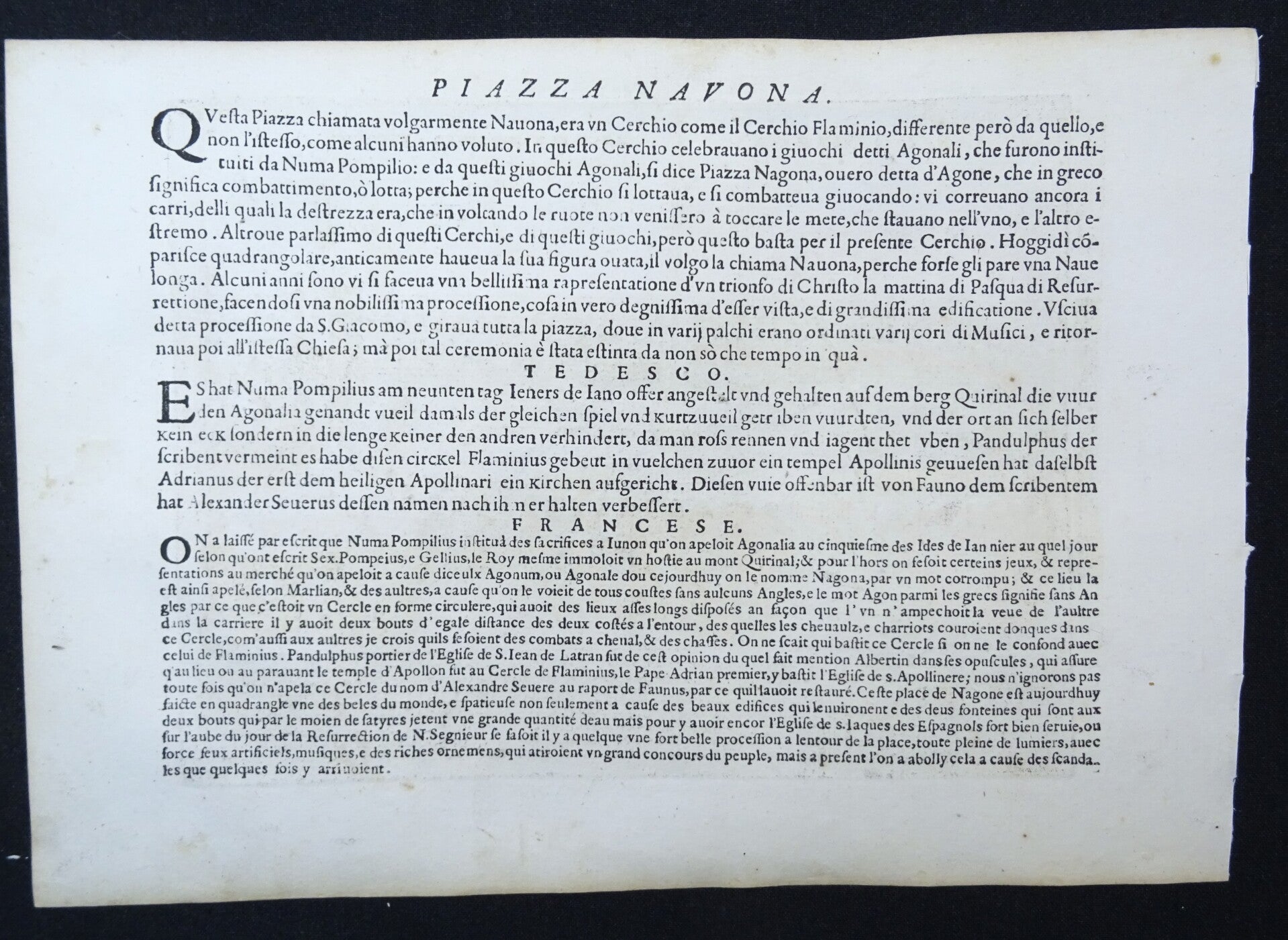
3.Circus Agonalis: The Circus Agnoalis is more commonly referred to as the Stadium of Domitian. It is located in the Campus Martius. The stadium was built in 86 AD and used for athletic events. The Piazza Navona, considered one of the more beautiful public spaces in Rome, is on this site. The curved end of the circus can still be seen.
4.Circus Flaminius: The Circus Flaminus did not have permanent seating like the Circus Maximus, and that made its uses more flexible. It was located in the Campus Flaminius. While Gaius Flaminius did significantly develop the area, it was called the Flaminian Fields before his role as consul.
The engravings are taken from ´Splendore dell antica e moderna Roma ...´, published in Rome in 1624 (first edition started being published in parts from 1612 onwards). The view is explained in Latin text below the engraving.
Giacomo Lauro (or Jacobus Laurus) was an engraver, printer and print publisher. Active in Rome from 1583, when described as 'intagliatori di rame' (Ashby p.362). 17 March 1598 he applied for and was granted a 10-year papal privilege for an unspecified number of unnamed religious prints (Leuschner). Giacomo Lauro’s place and date of birth are unknown, although his signature “Jacobus Laurus Romanus” seems to indicate that the artist was proudly born Roman.
Lauro's earliest dated prints are of 1582 (Martyrdom of St Catherine), and carry the address of C. Duchetti (Ashby, 1926-27, p.362). He also worked for Panzera, c.1589 (Bertolotti). From 1590 he tried to establish himself as a publisher of his own work . He acquired and restored old plates, published copies of classic prints as Marcantonio's St Paul preaching (B.XIV.50.44). He accepted commissions, as the map of Rocca Contrada, 1594 (Anselmi). He probably acquired plates from Jacob Matham which he published in 1598 (Widerkehr). His 'Antiquae Urbis Splendor' was published in parts from 1612. In the volumes issued in 1614 and 1615 Lauro refers to having worked on the study of antiquity for 28 years which would mean that he began this work about 1586 (see Ashby, 1926-27, p.362).
Excellent condition. Never folded. Strong paper. Ample margins.
Images 18x23cm, pages 22x32cm