

Rome, 2 views of Theatres, Giacomo Lauro, 1625, Theatrum Pompei Magni / Theatrum Marci Scauri
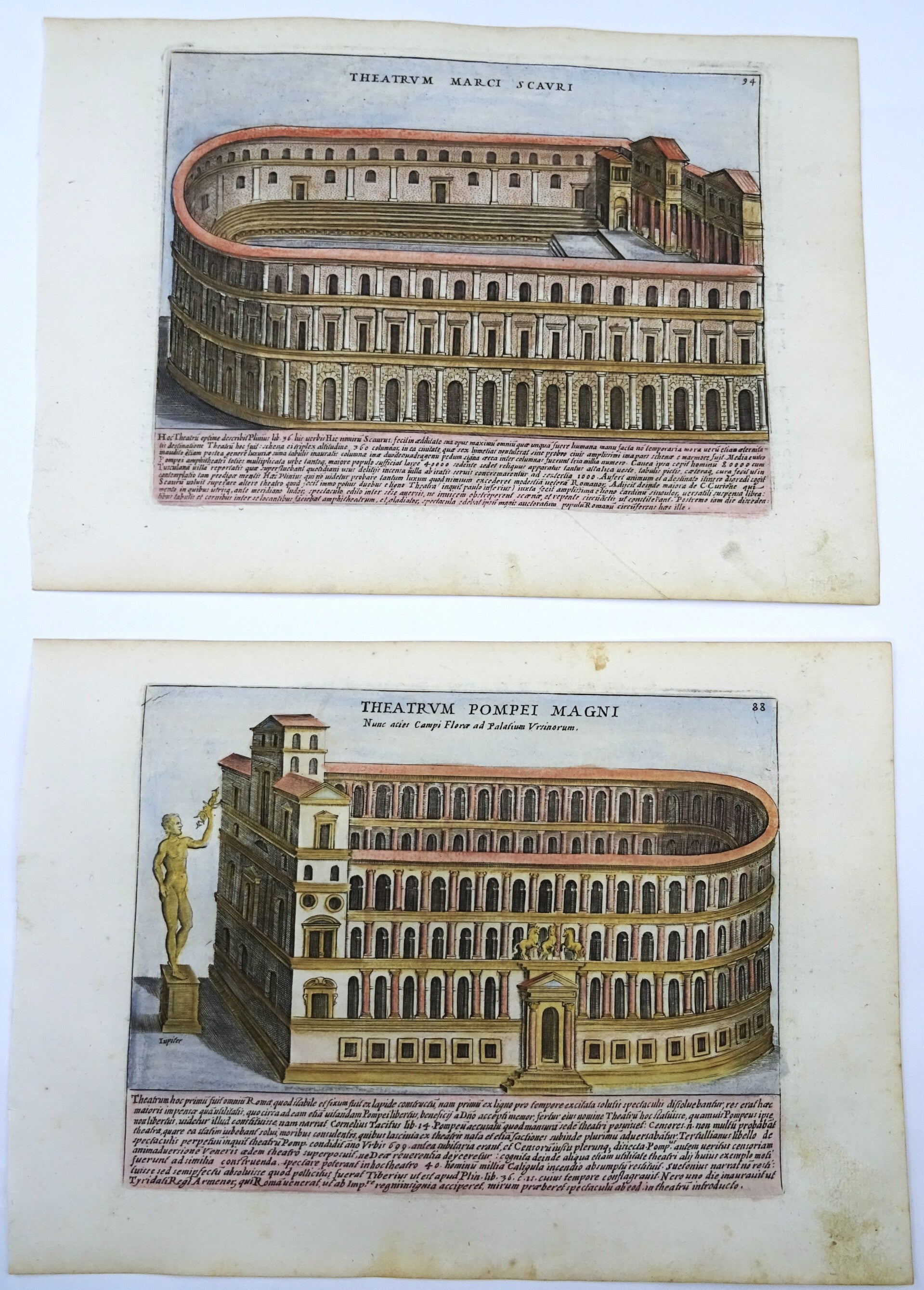
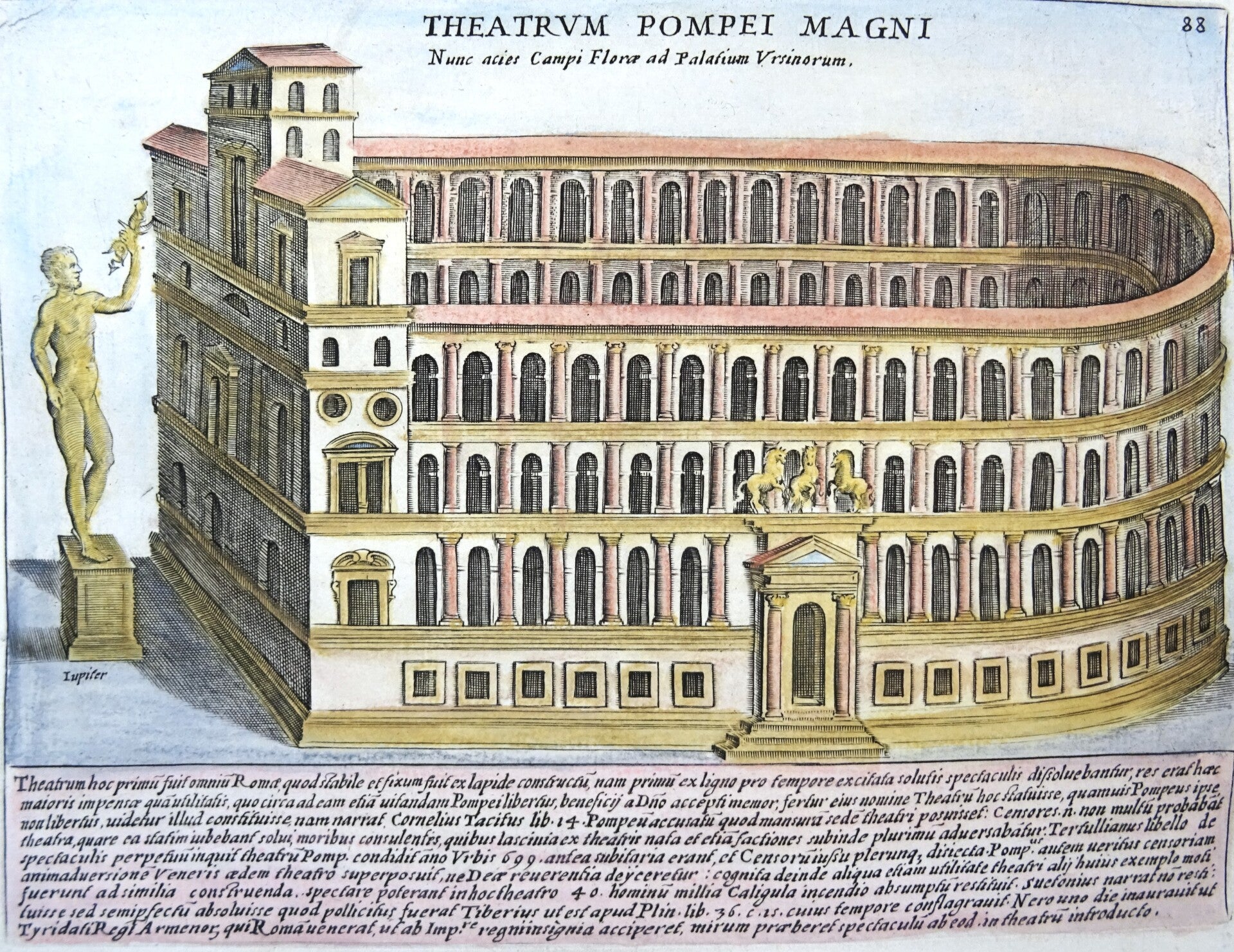
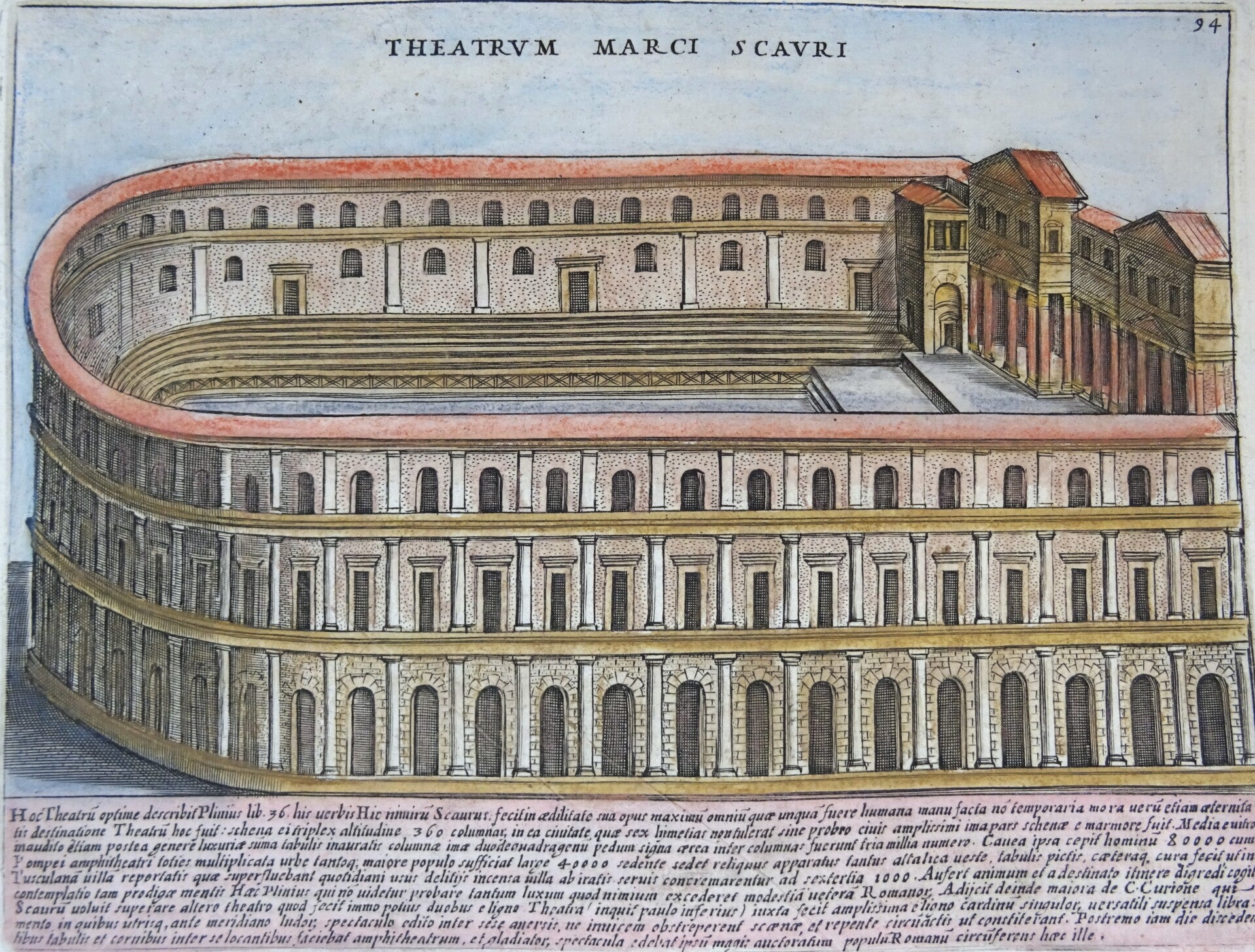
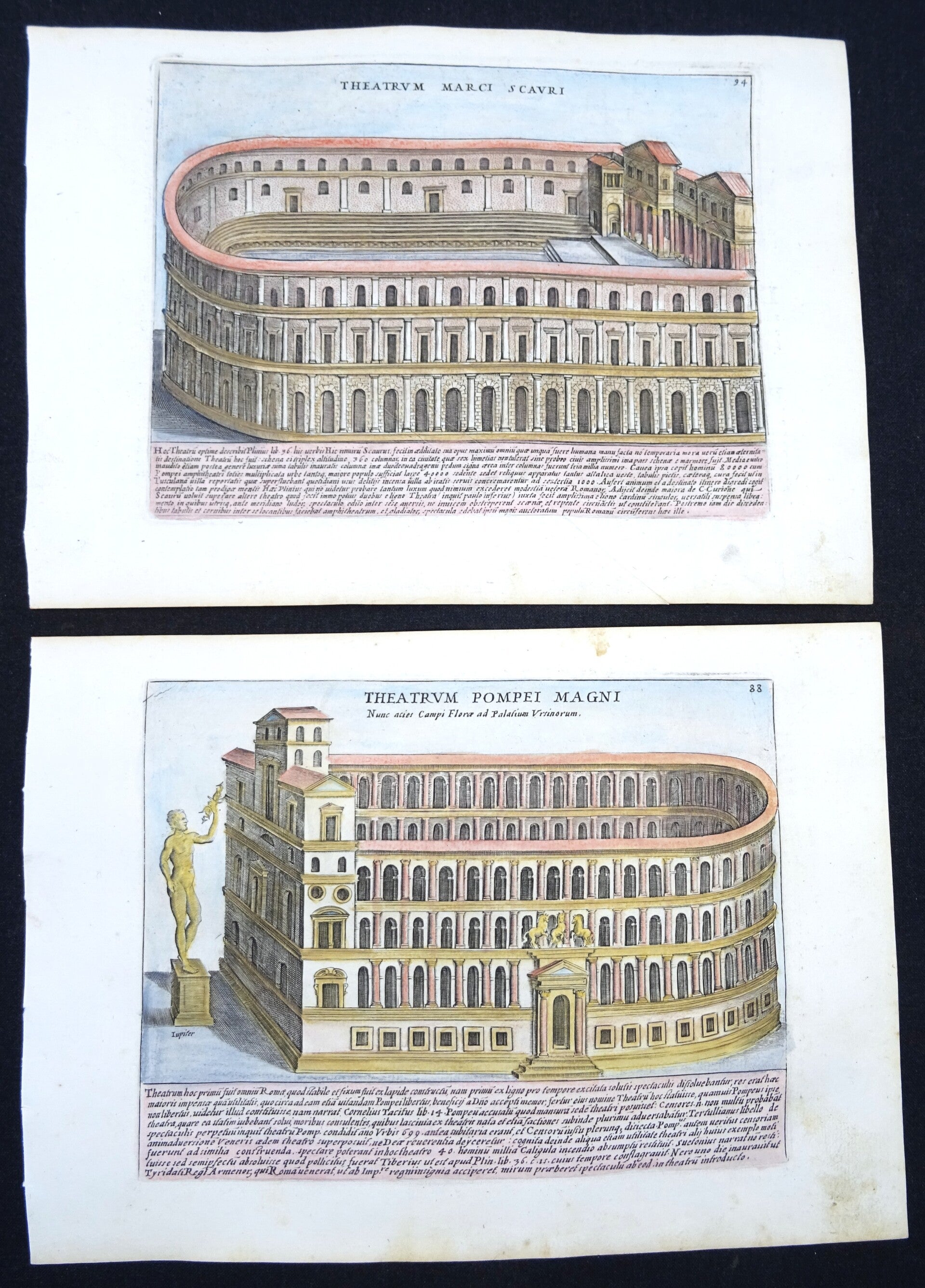
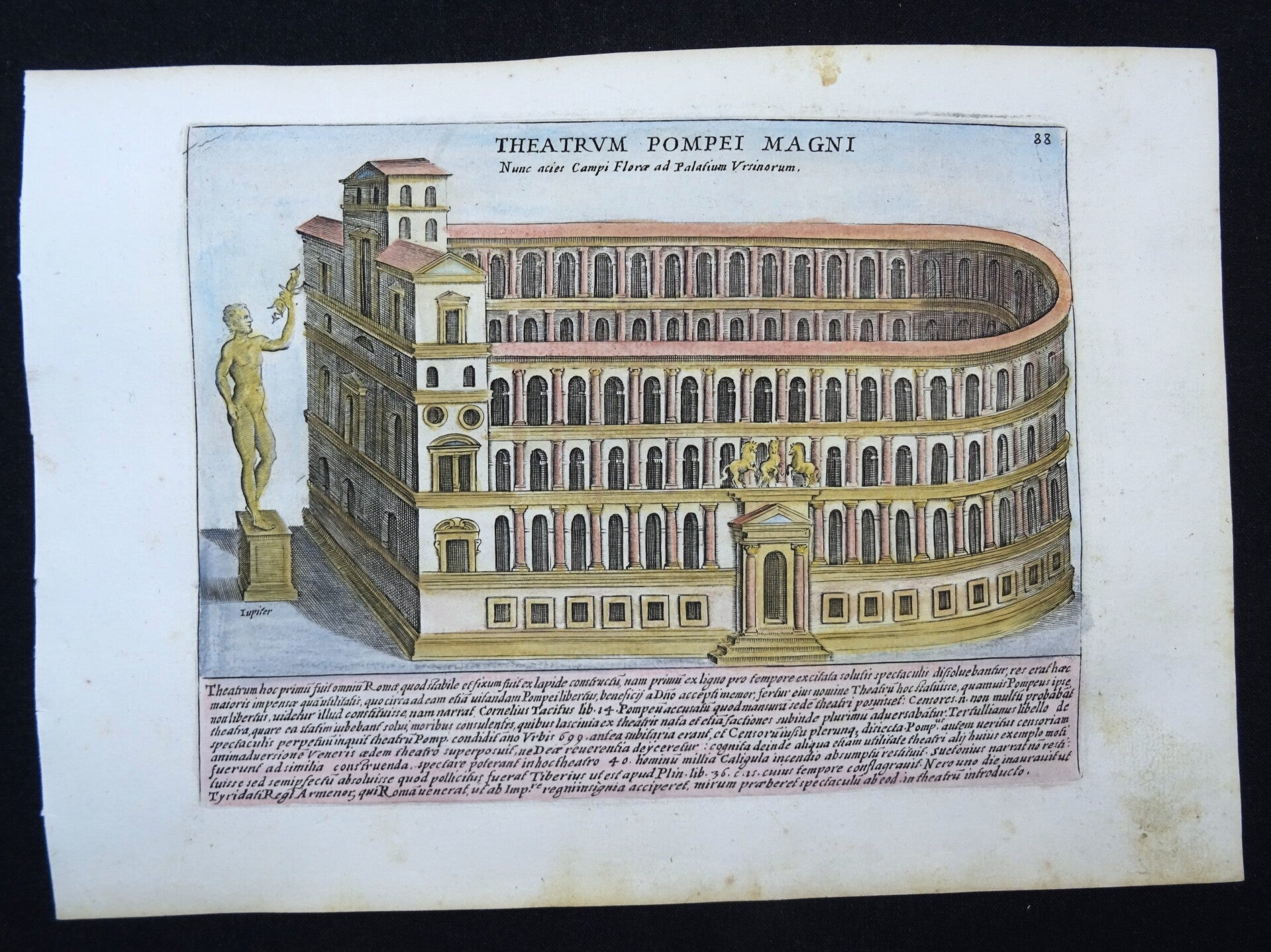
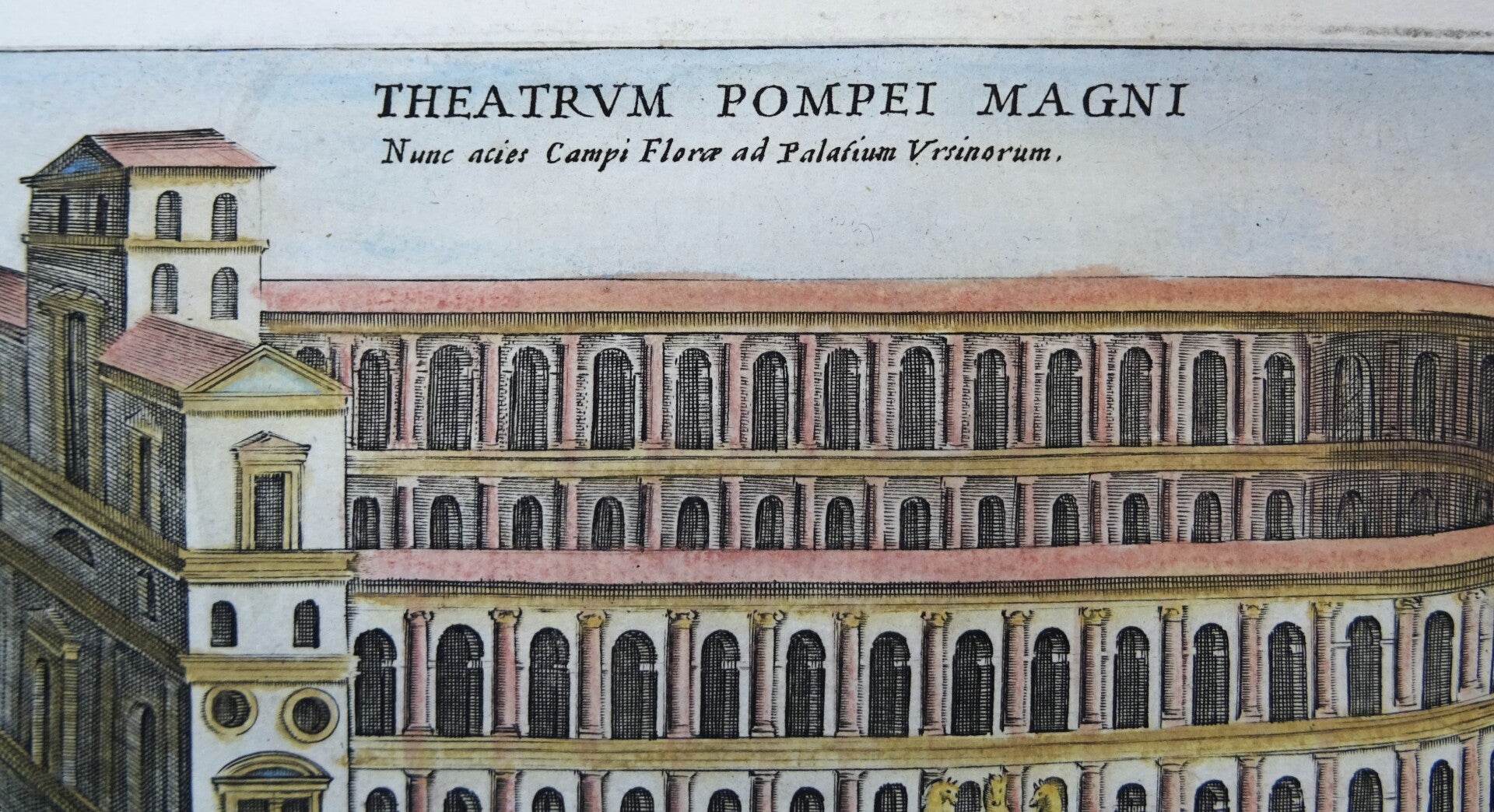
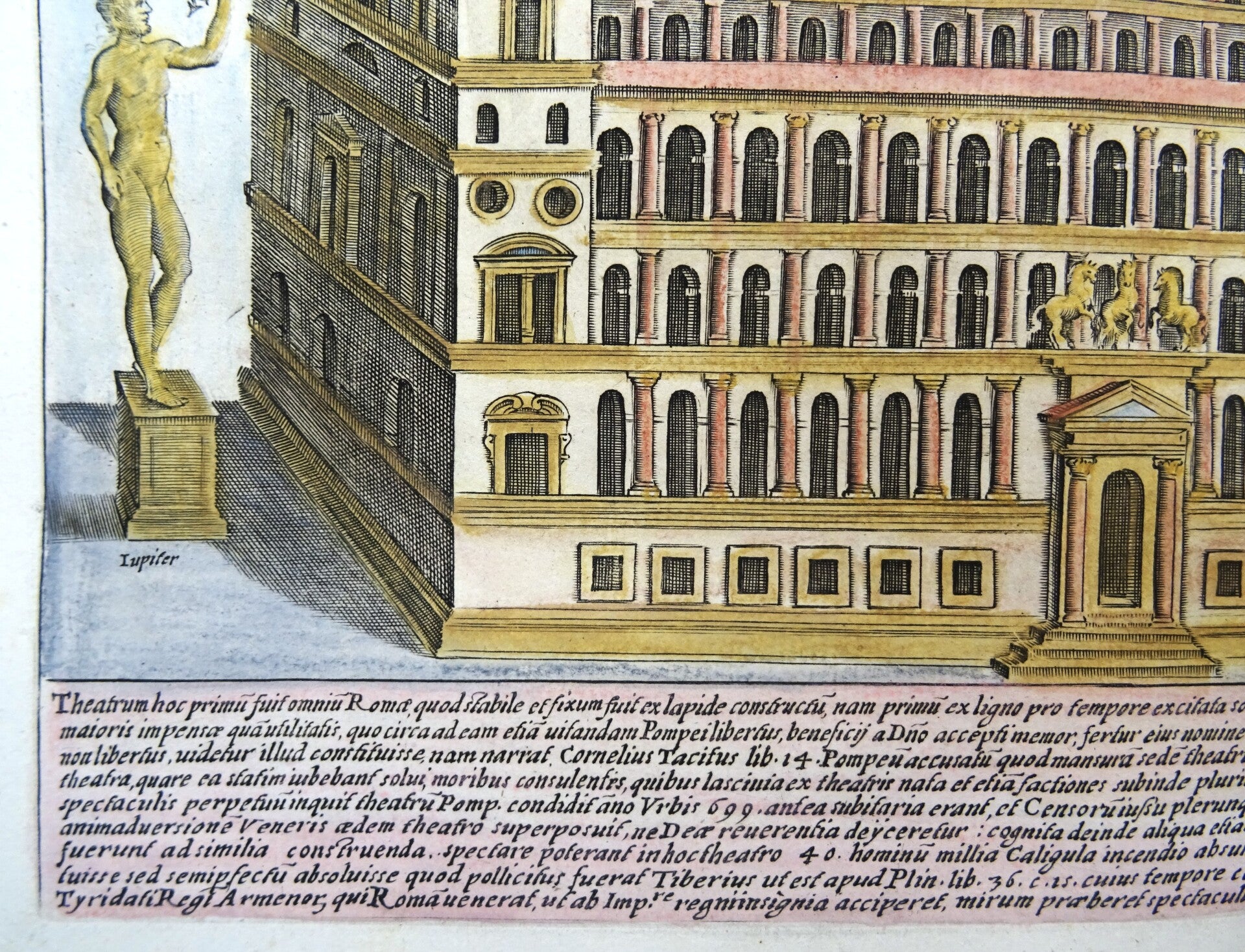
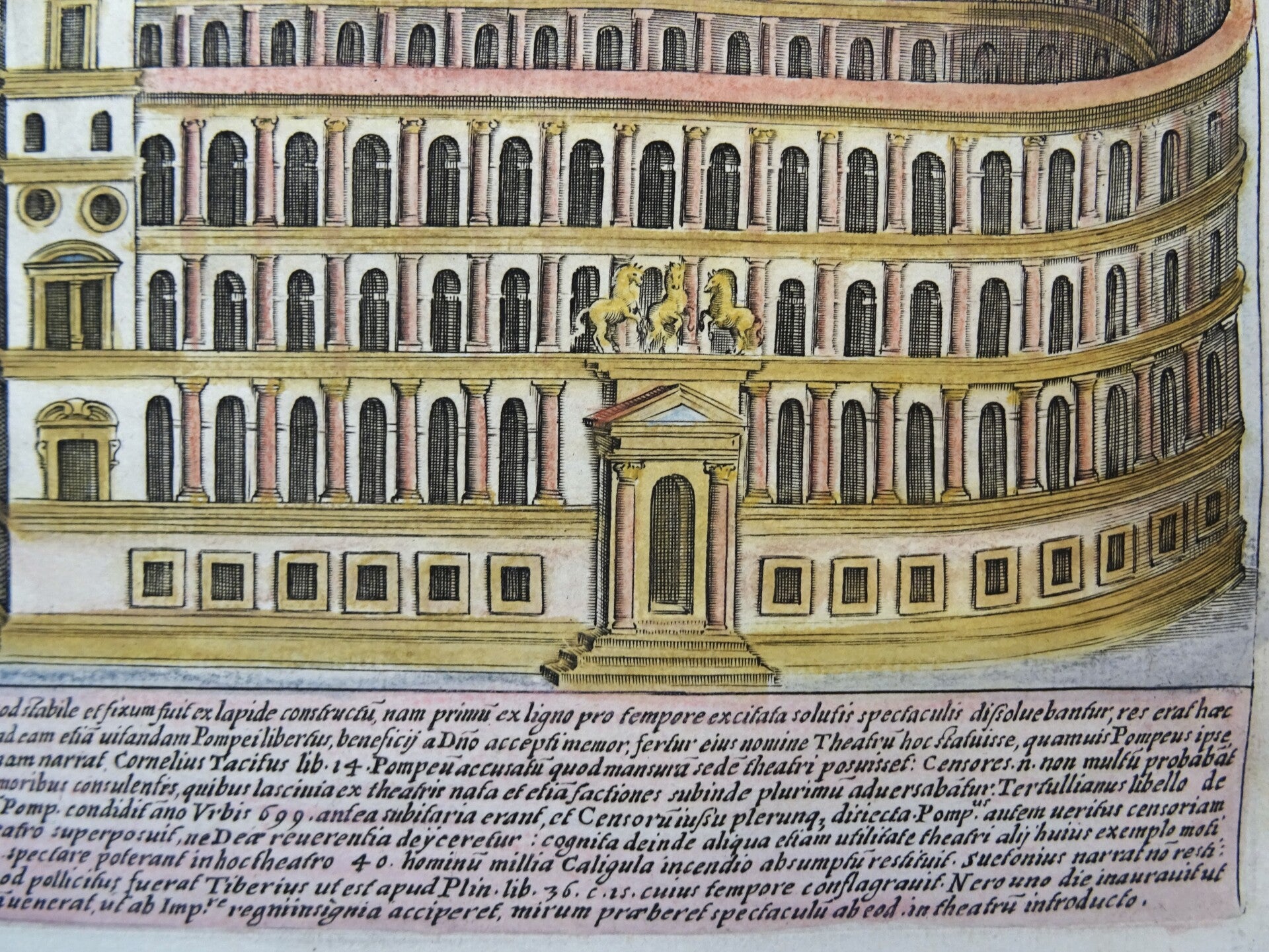
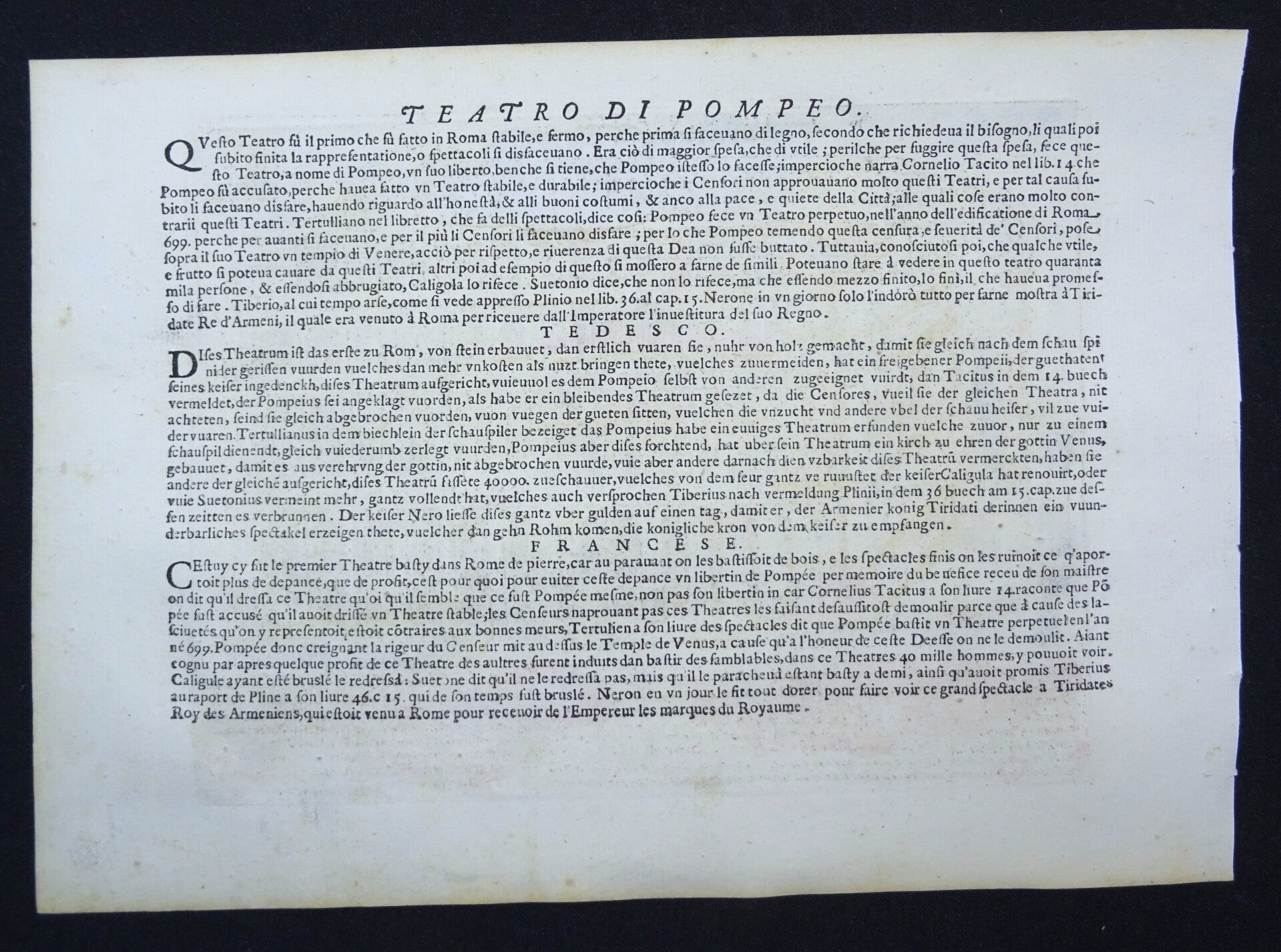
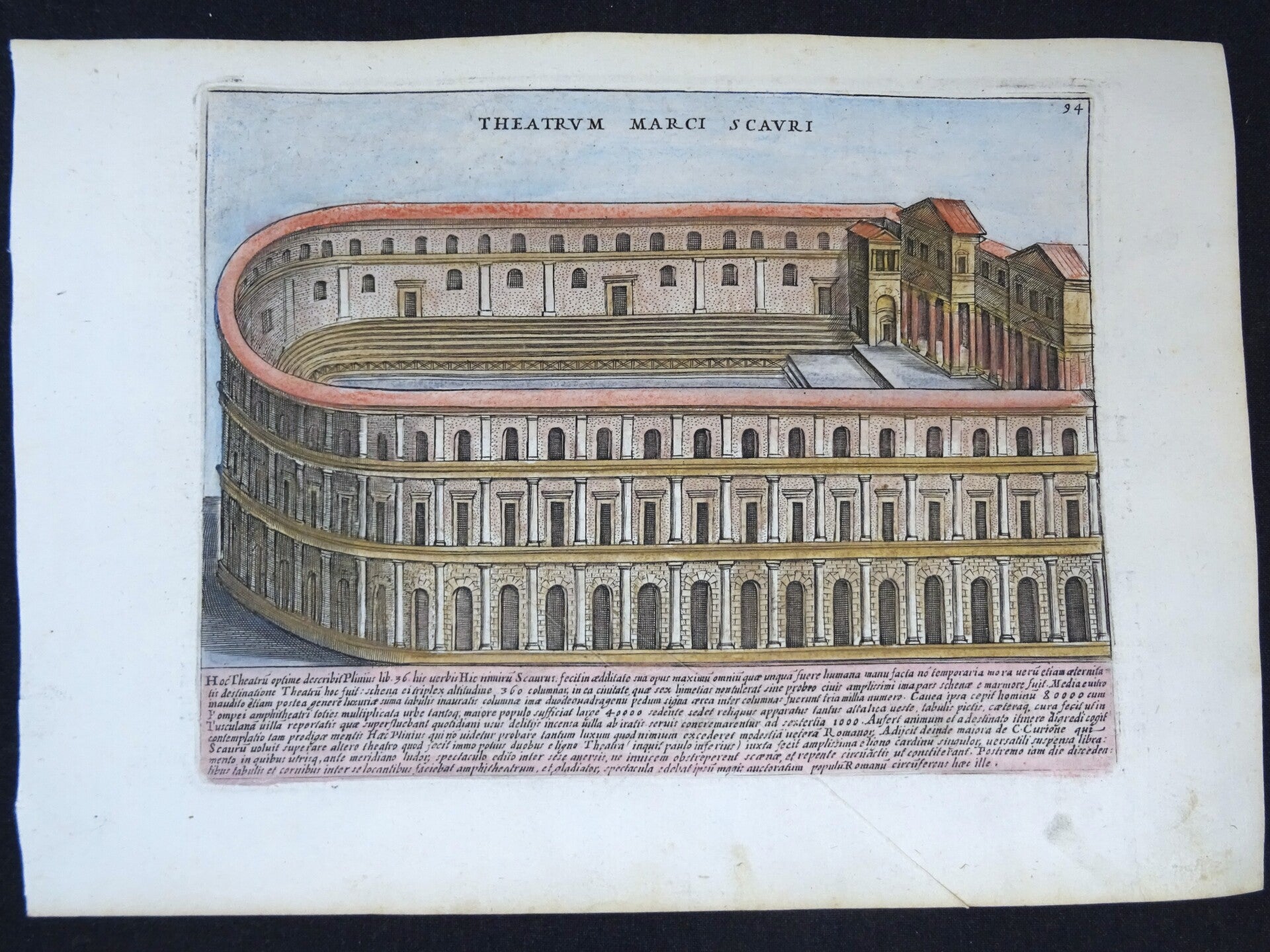
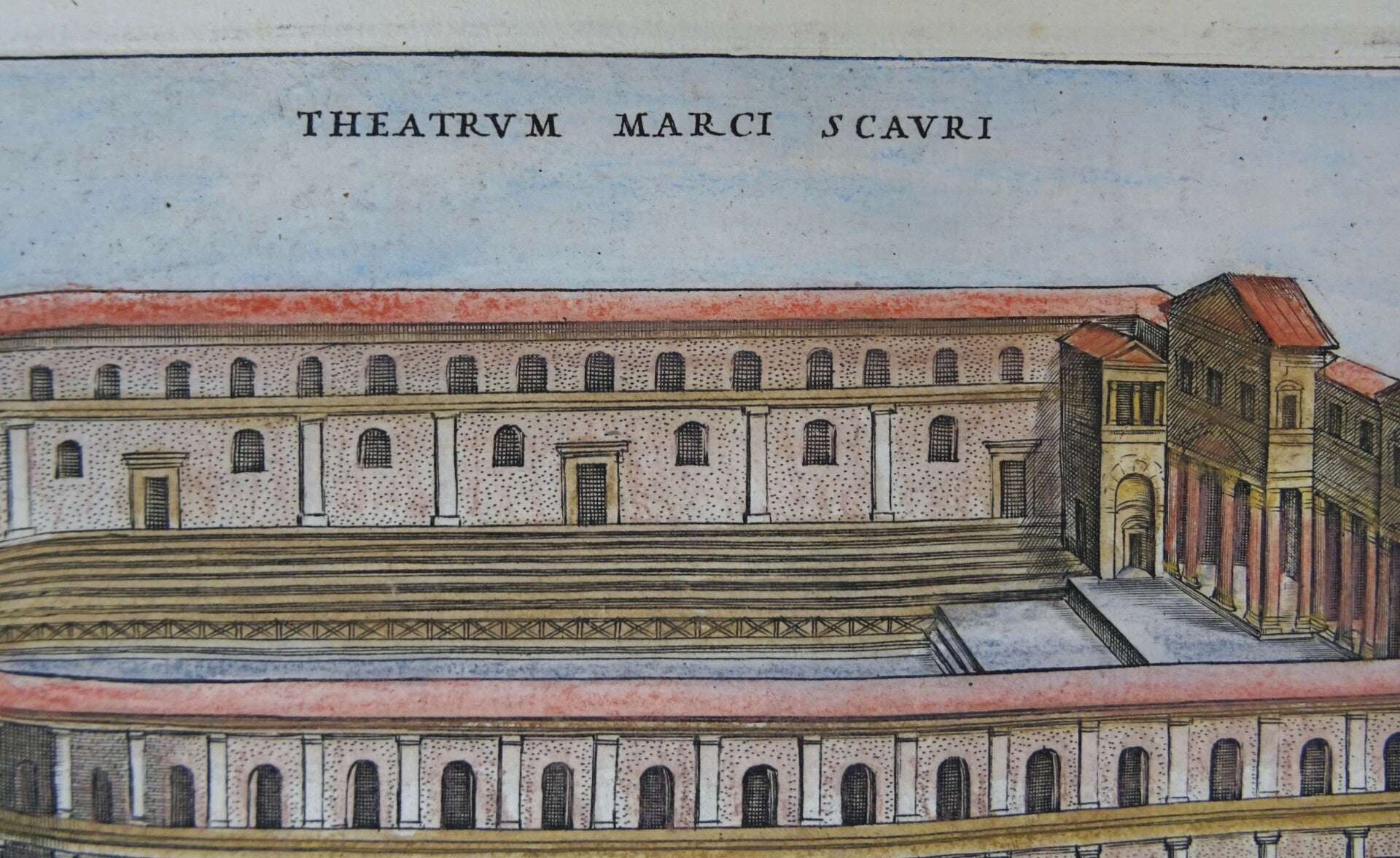
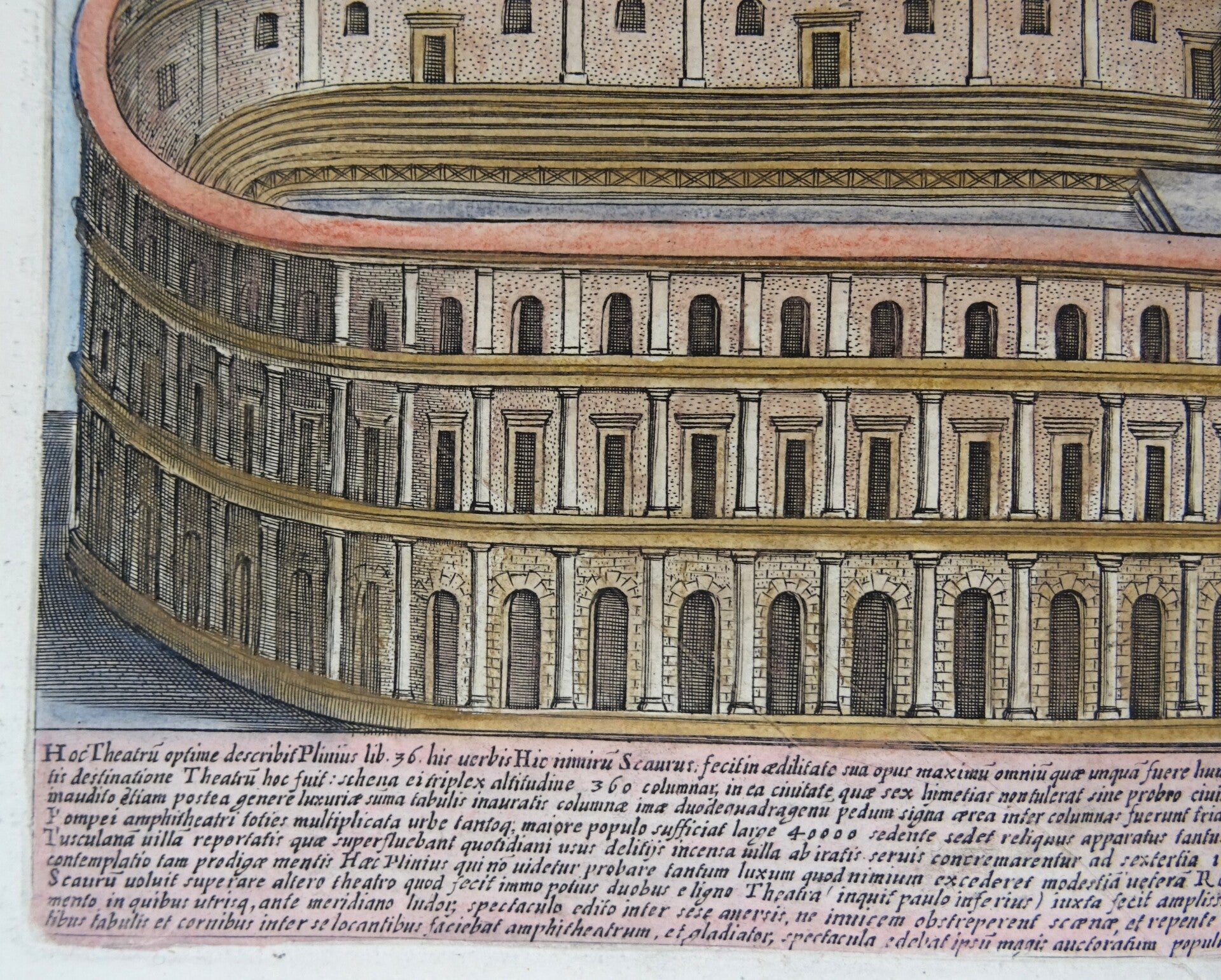
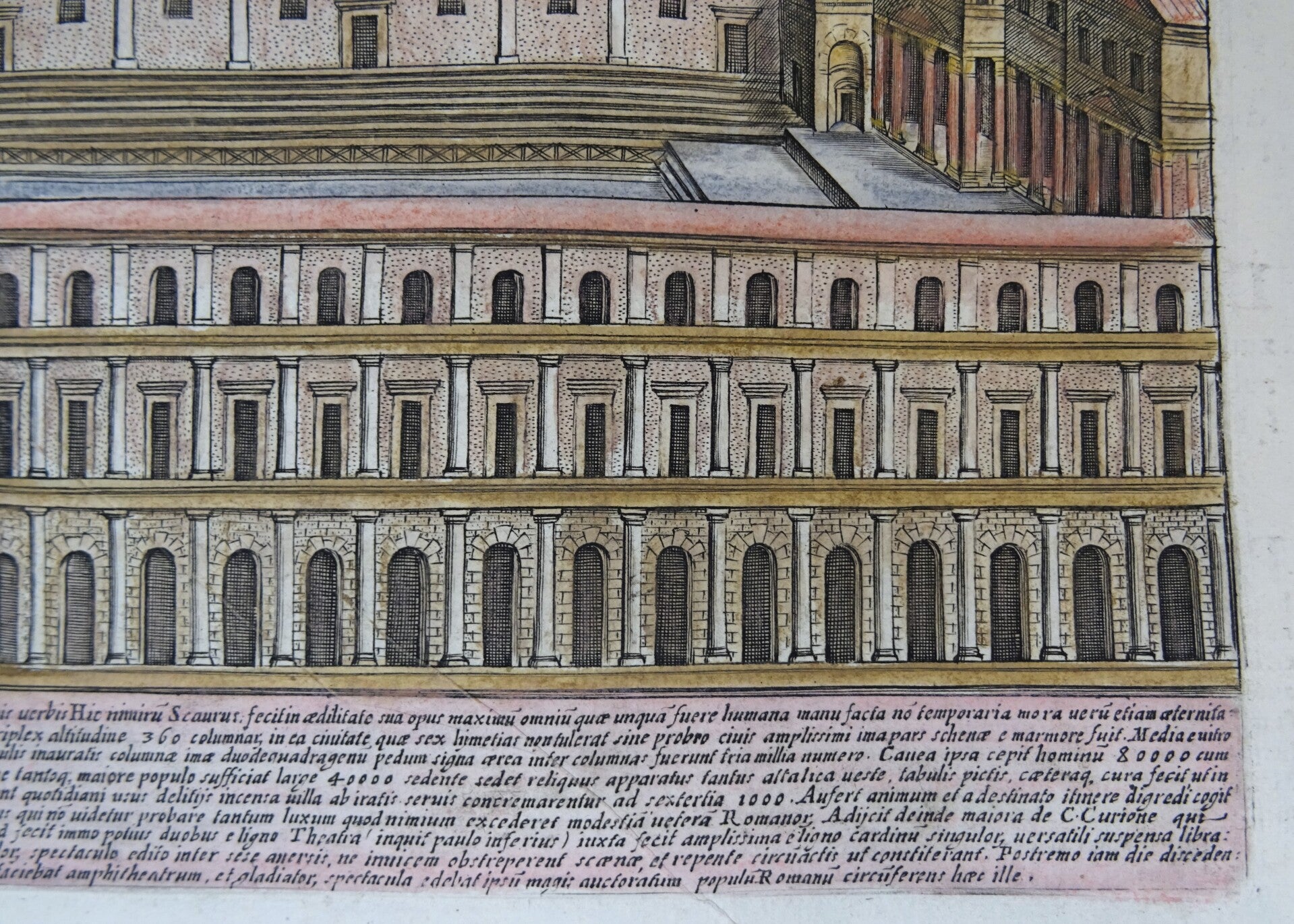
Two views of theaters in Rome as they were in Antiquity.
1. The Theater of Pompey was the first permanent stone theater in Rome. It was built by by Pompeius on the Campus Martius. Prior to that time, theaters were wooden and built for necessity for specific events. The theater was built with a temple, that of Venus Victrix and both may have been dedicated at the same time around 52 BC.
2. The theater of Marcus Scauri was a temporary theater described by Pliny the Elder in 58 BC. "The building had three stories, supported on 360 columns...The lower level was marble; the second, glass -- a sort of luxury which since then has been quite unheard of; and the upper most was made of gilded wood. The lowermost columns... were 38 feet high, and placed between them...were 3,000 statues. The theatre could accommodate 80,000 spectators."
The engravings are taken from ´Splendore dell antica e moderna Roma ...´, published in Rome in 1624 (first edition started being published in parts from 1612 onwards). The view is explained in Latin text below the engraving.
Giacomo Lauro (or Jacobus Laurus) was an engraver, printer and print publisher. Active in Rome from 1583, when described as 'intagliatori di rame' (Ashby p.362). 17 March 1598 he applied for and was granted a 10-year papal privilege for an unspecified number of unnamed religious prints (Leuschner). Giacomo Lauro’s place and date of birth are unknown, although his signature “Jacobus Laurus Romanus” seems to indicate that the artist was proudly born Roman.
Lauro's earliest dated prints are of 1582 (Martyrdom of St Catherine), and carry the address of C. Duchetti (Ashby, 1926-27, p.362). He also worked for Panzera, c.1589 (Bertolotti). From 1590 he tried to establish himself as a publisher of his own work . He acquired and restored old plates, published copies of classic prints as Marcantonio's St Paul preaching (B.XIV.50.44). He accepted commissions, as the map of Rocca Contrada, 1594 (Anselmi). He probably acquired plates from Jacob Matham which he published in 1598 (Widerkehr). His 'Antiquae Urbis Splendor' was published in parts from 1612. In the volumes issued in 1614 and 1615 Lauro refers to having worked on the study of antiquity for 28 years which would mean that he began this work about 1586 (see Ashby, 1926-27, p.362).
Excellent condition. Never folded. Strong paper. Ample margins.
Images 18x23cm, pages 22x32cm