

Rome, Castro Pretorio, Monte Giordano, Campus Martius, 2 views Giacomo Lauro, 1625, Castrum Praetorium / Villa Publica
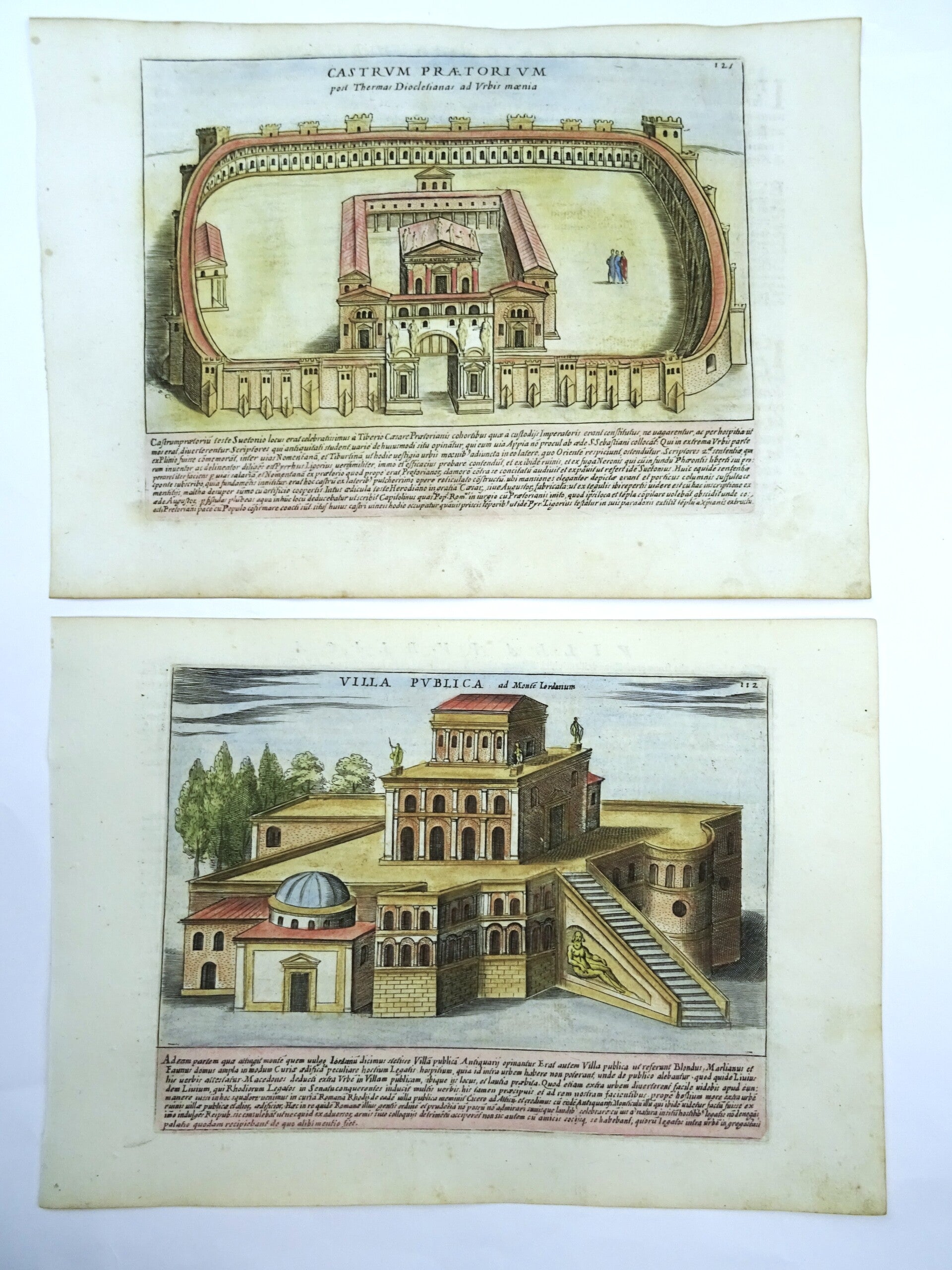
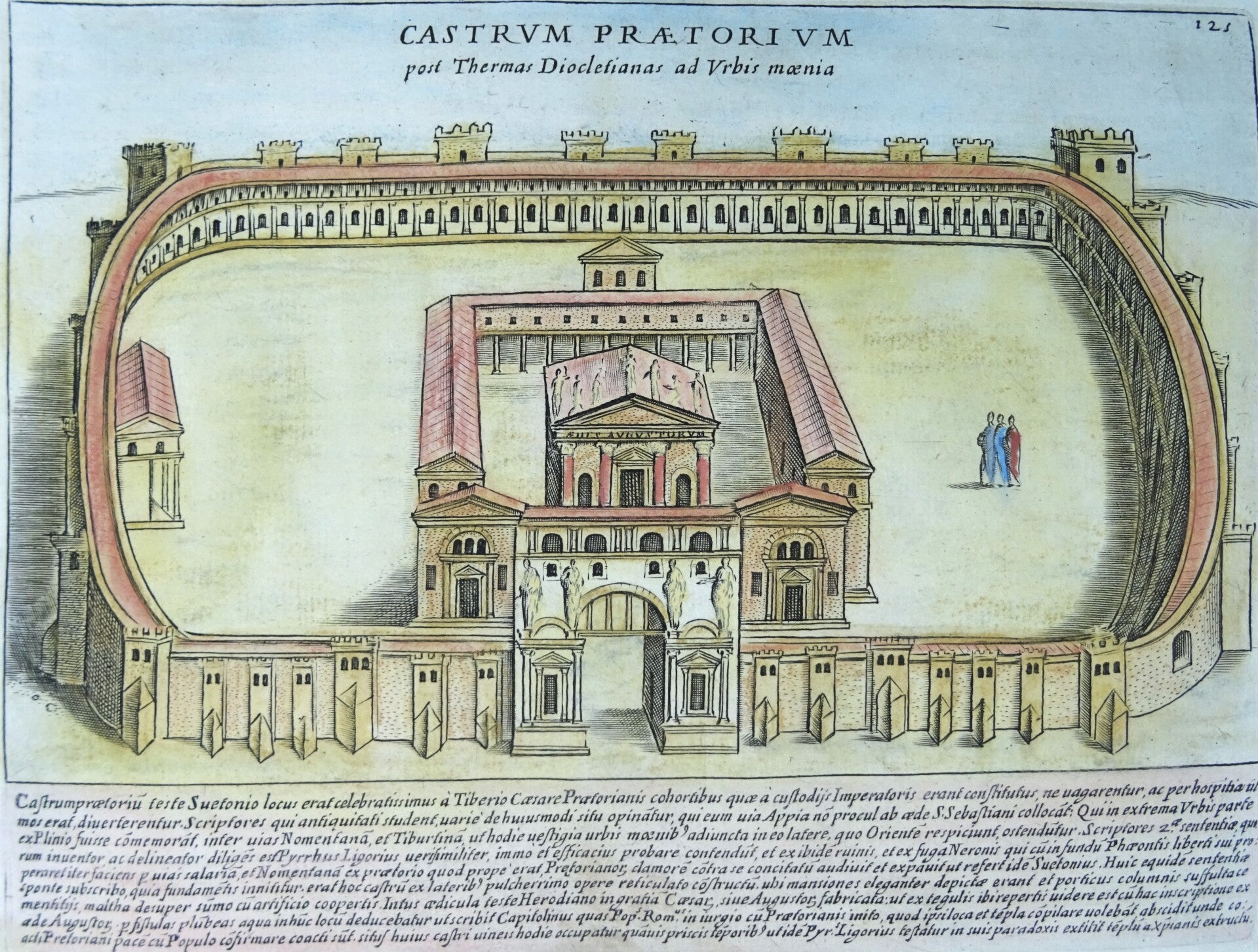
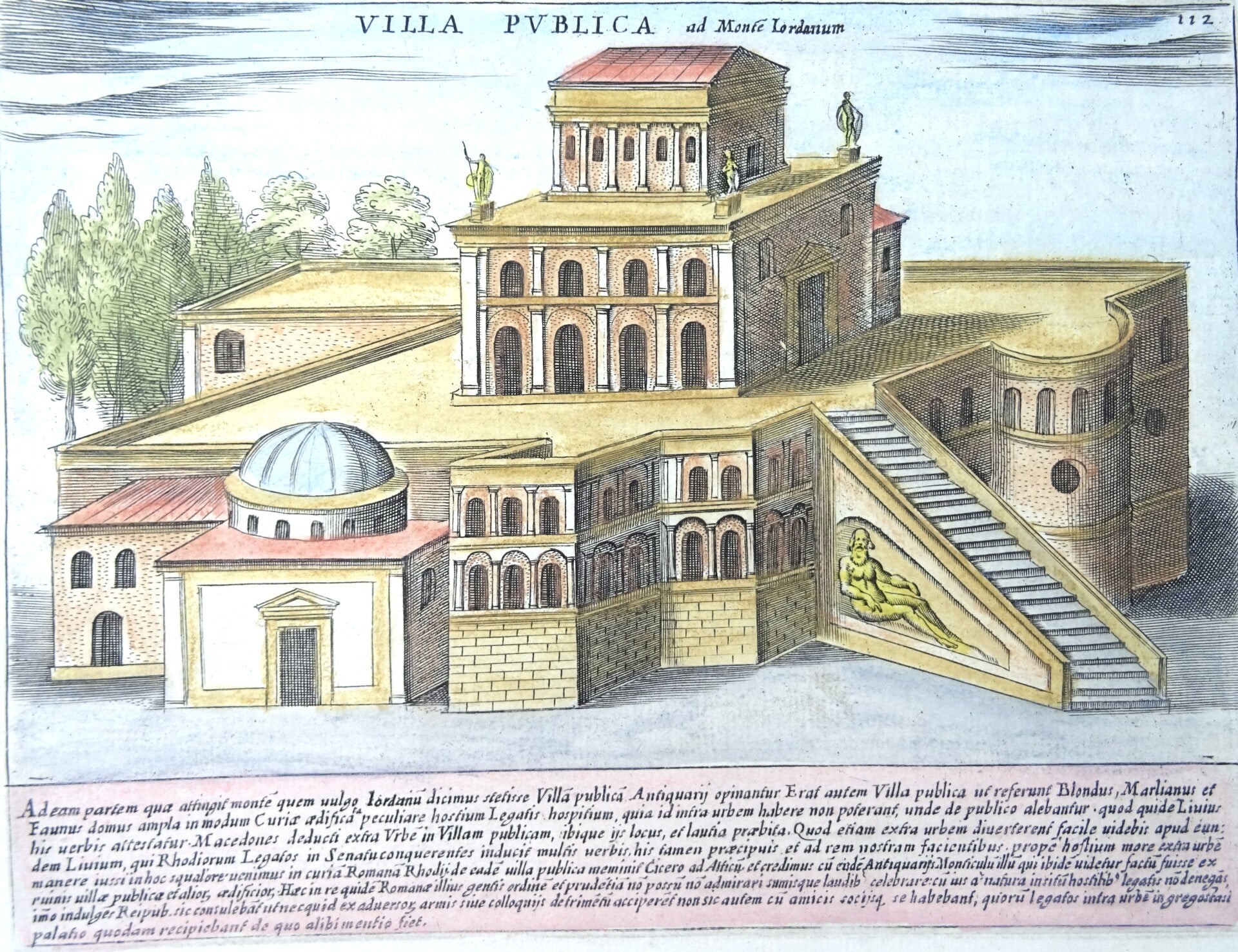
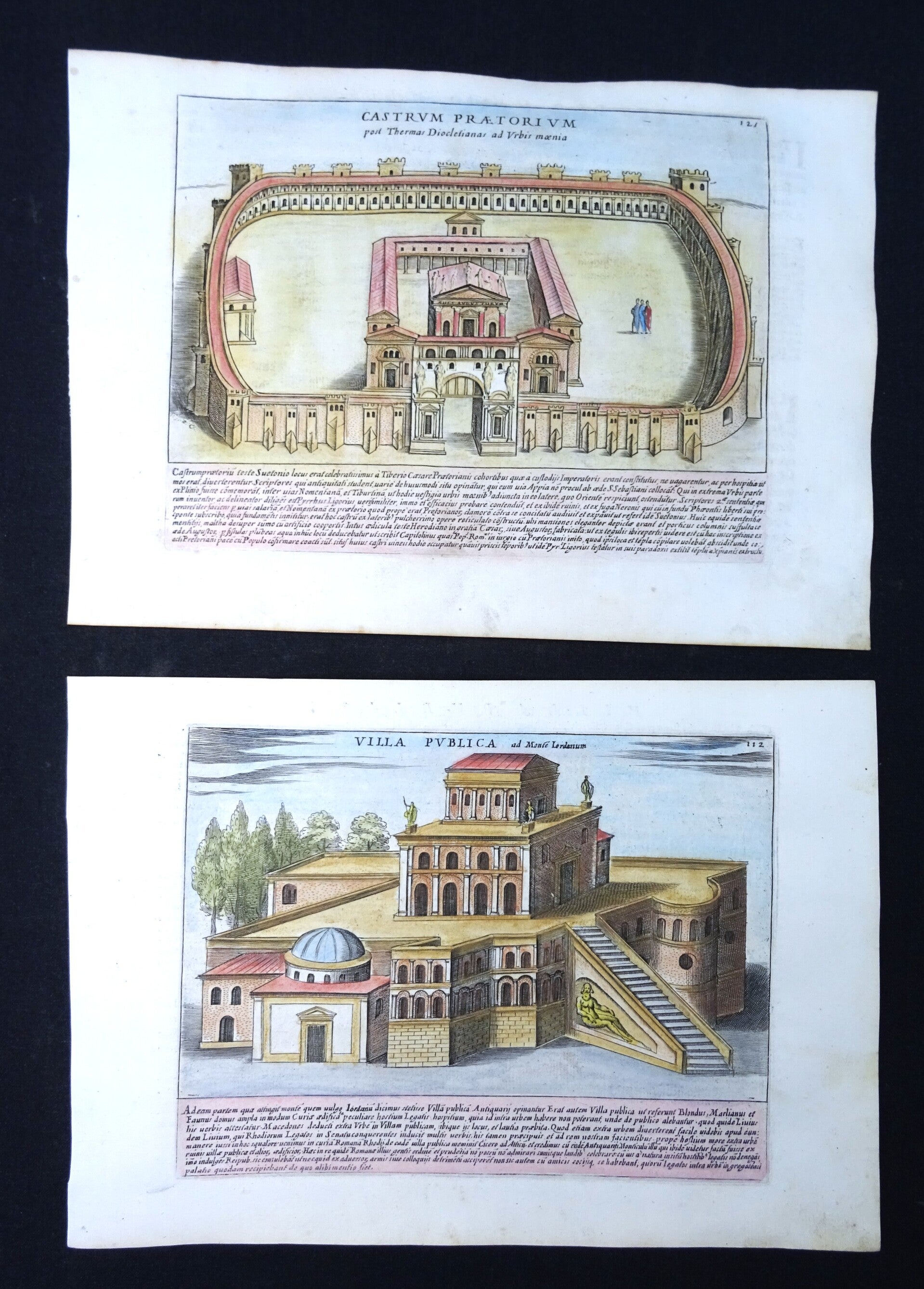
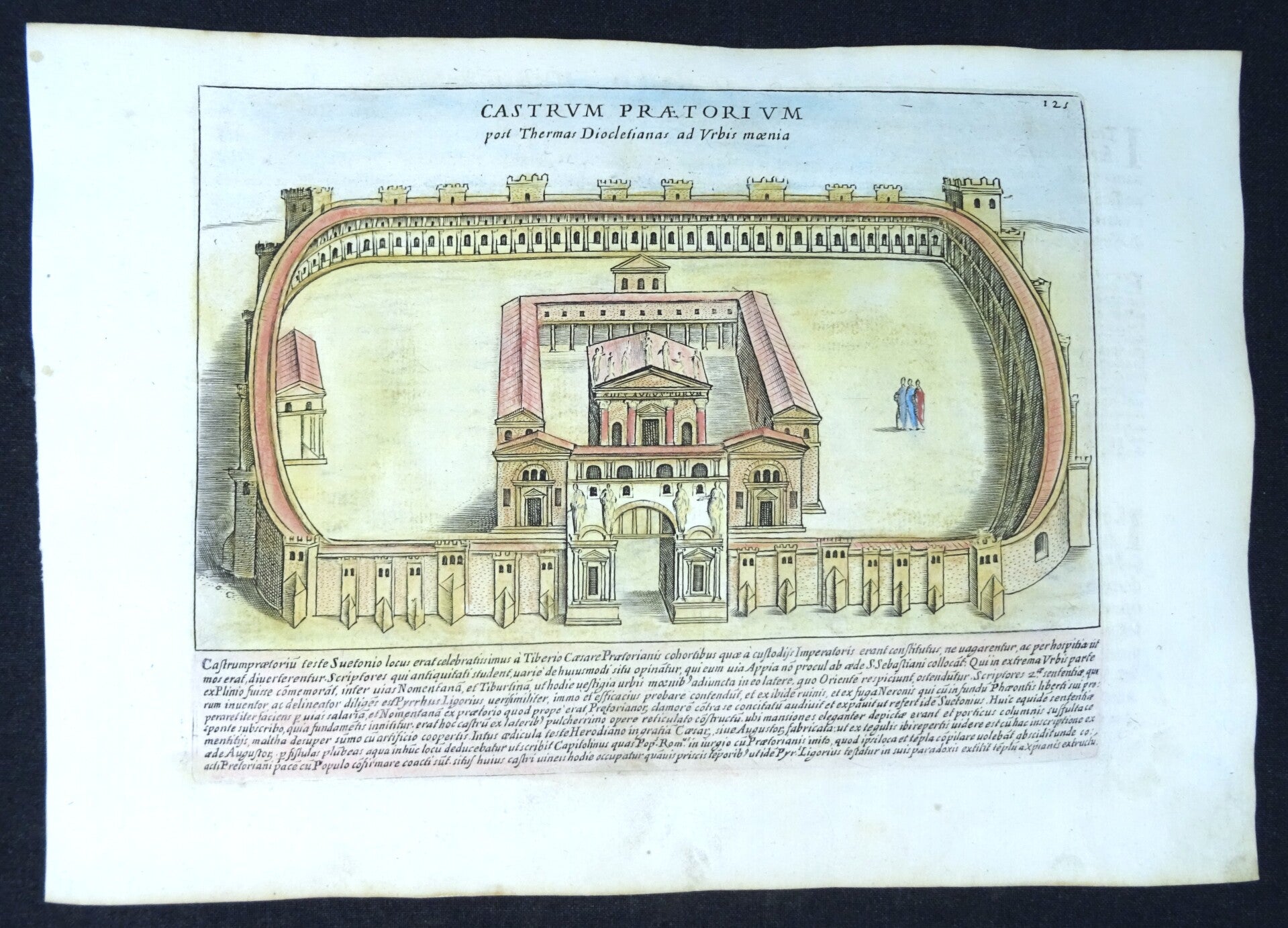
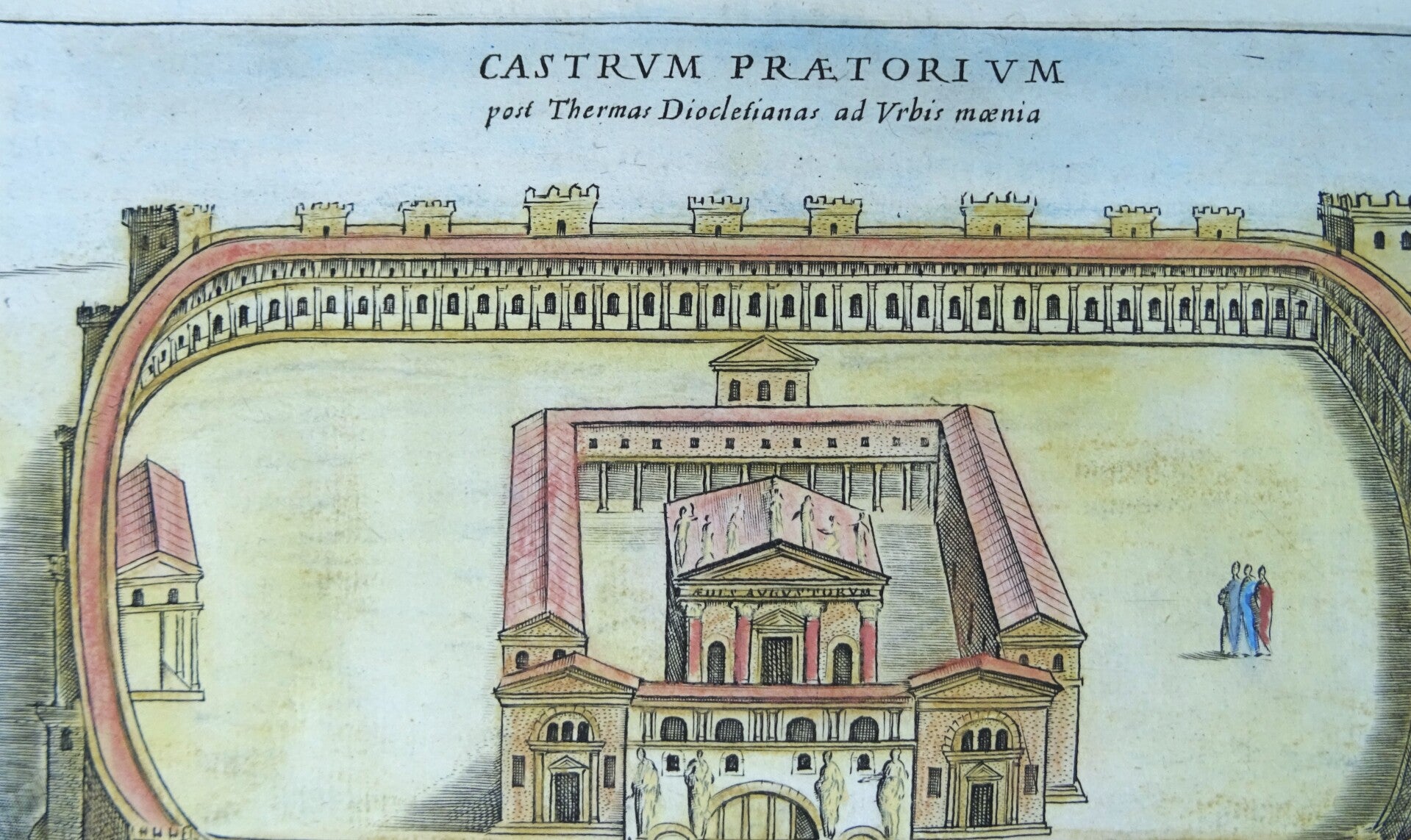
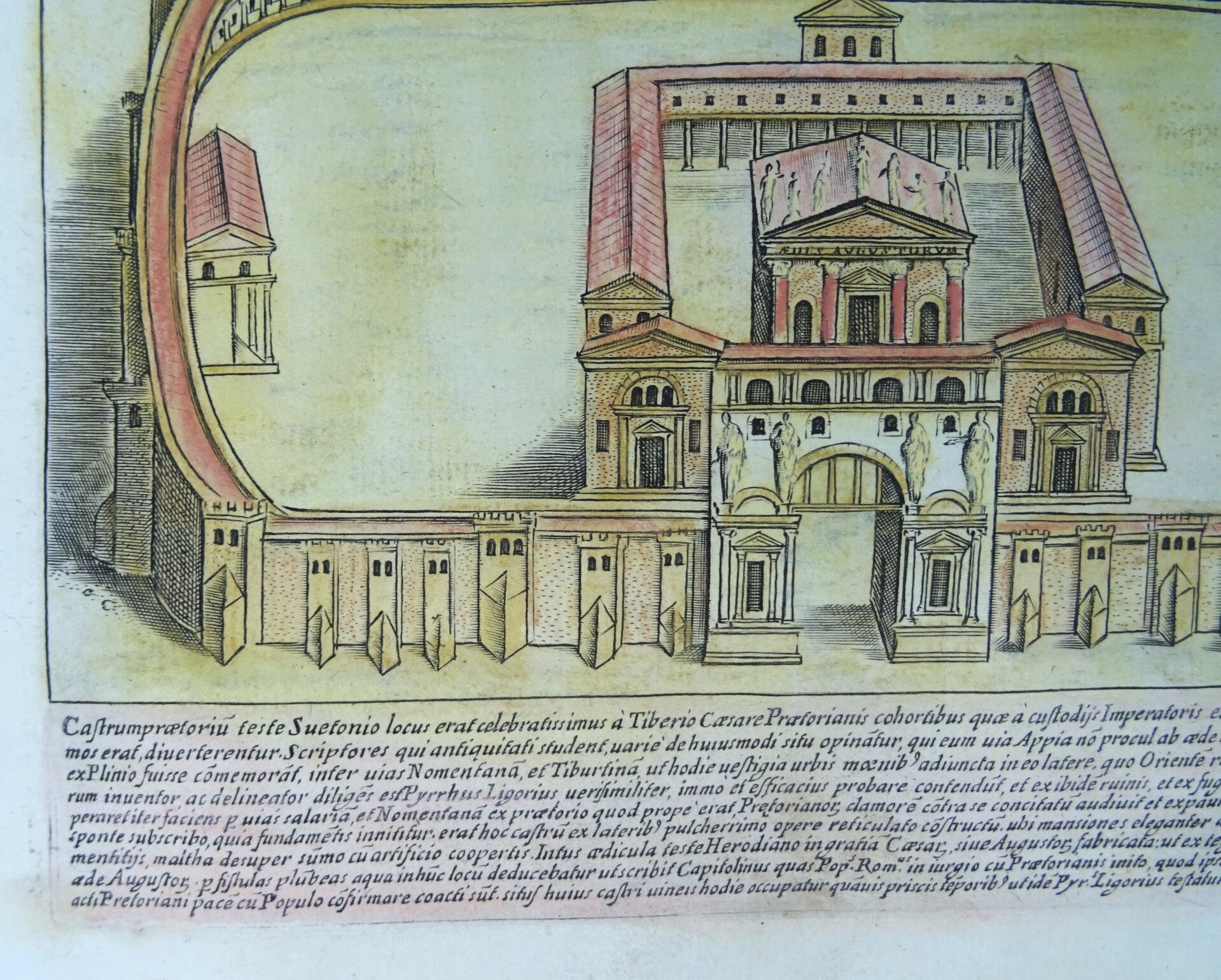
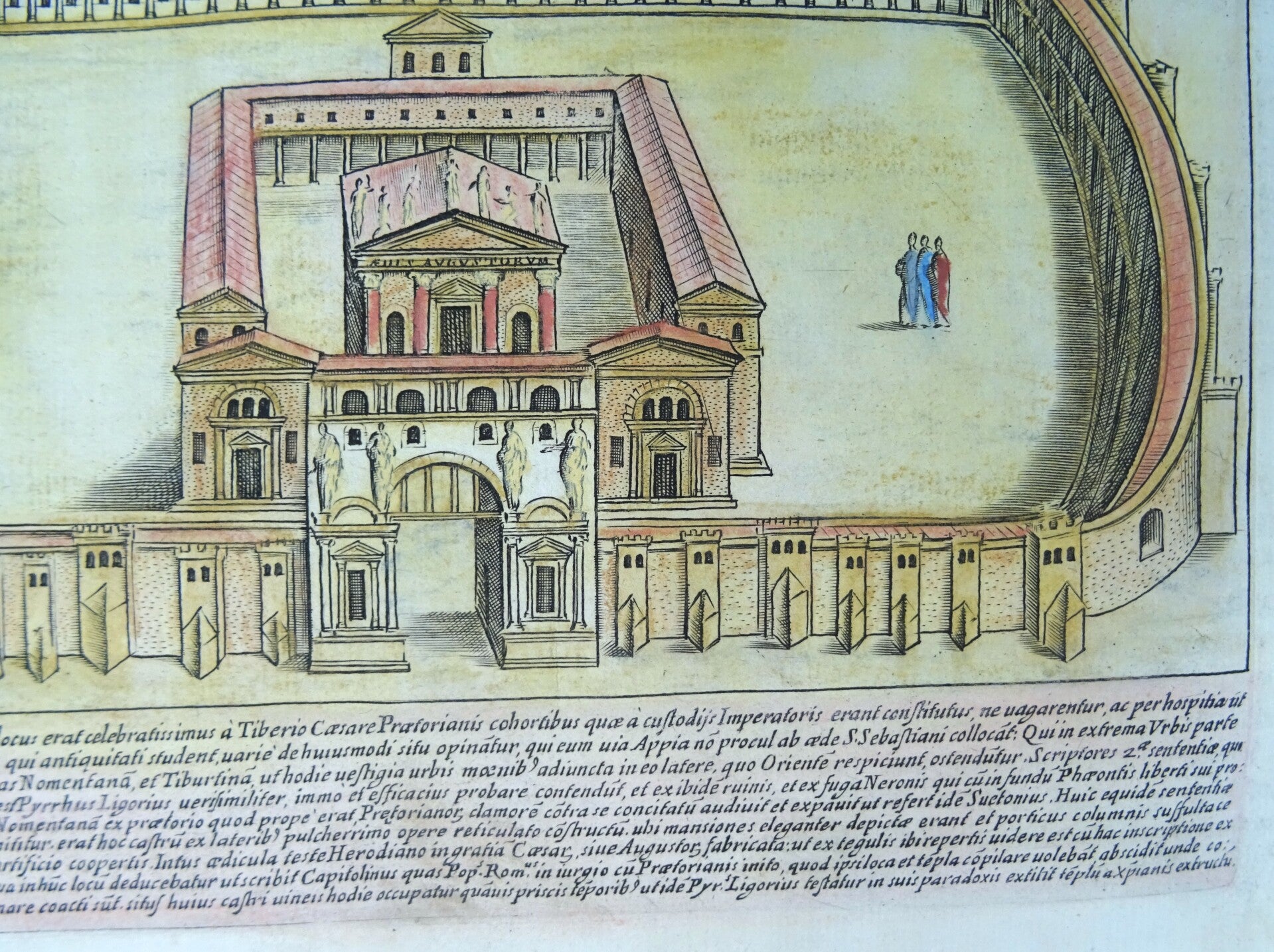
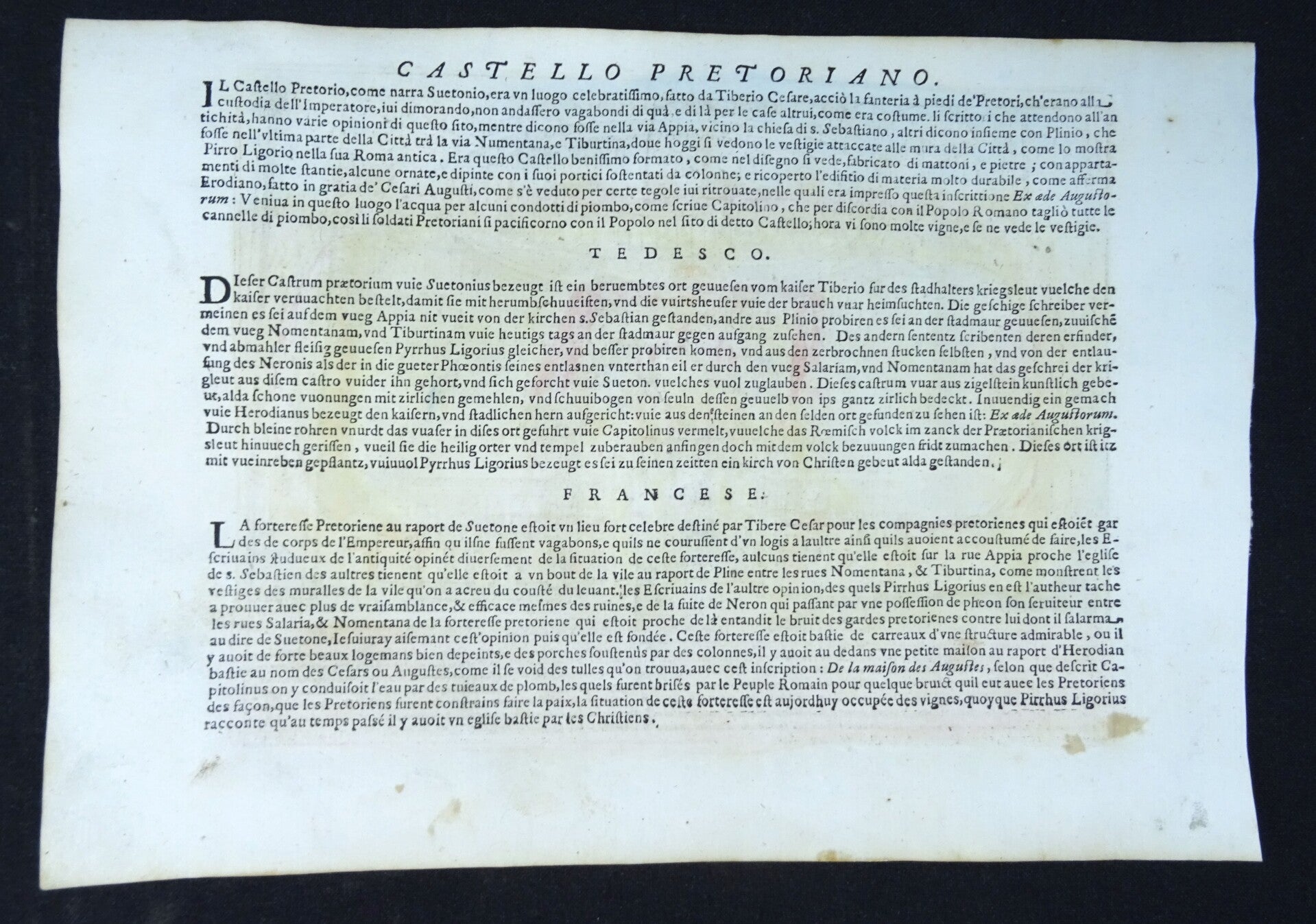
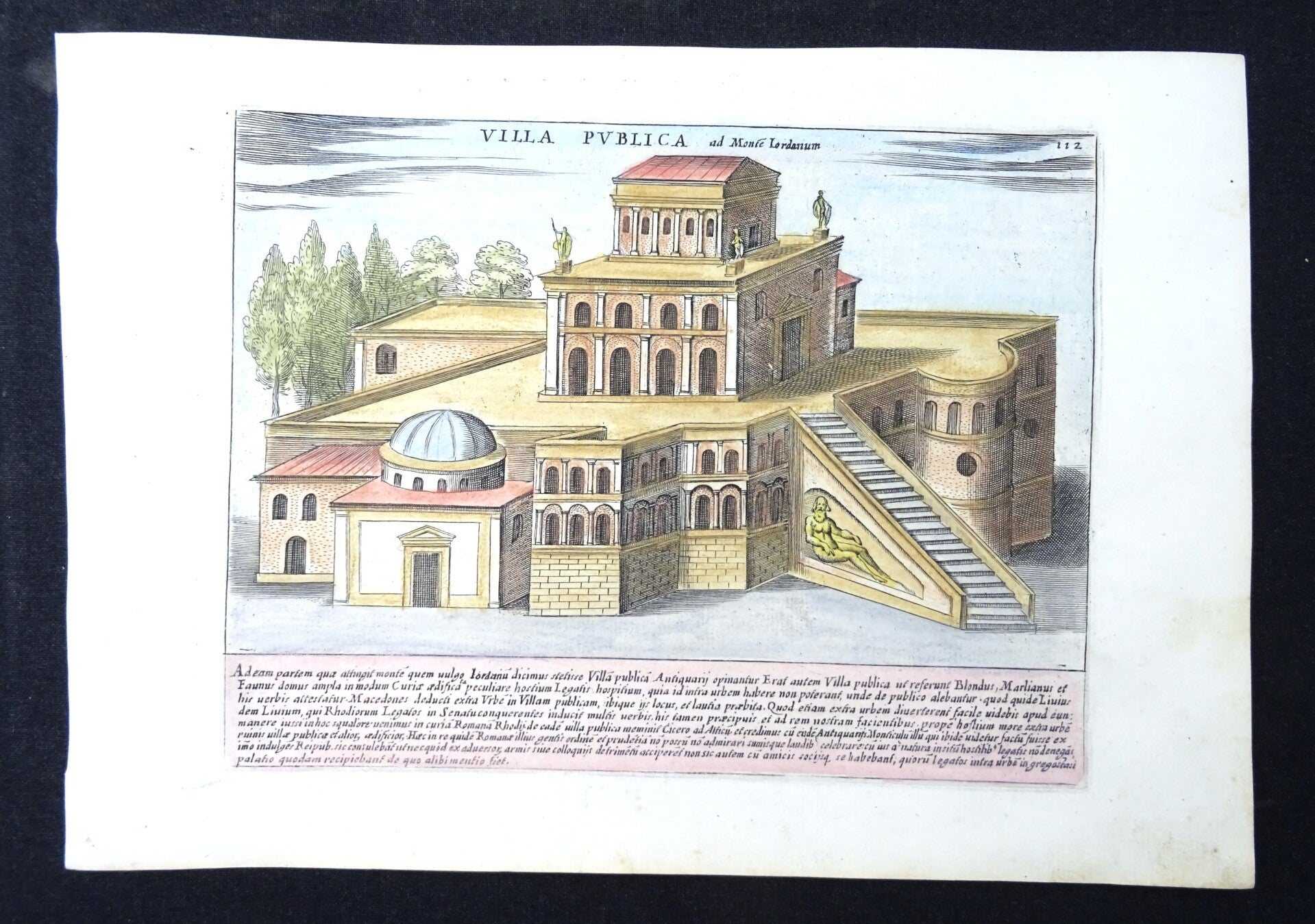
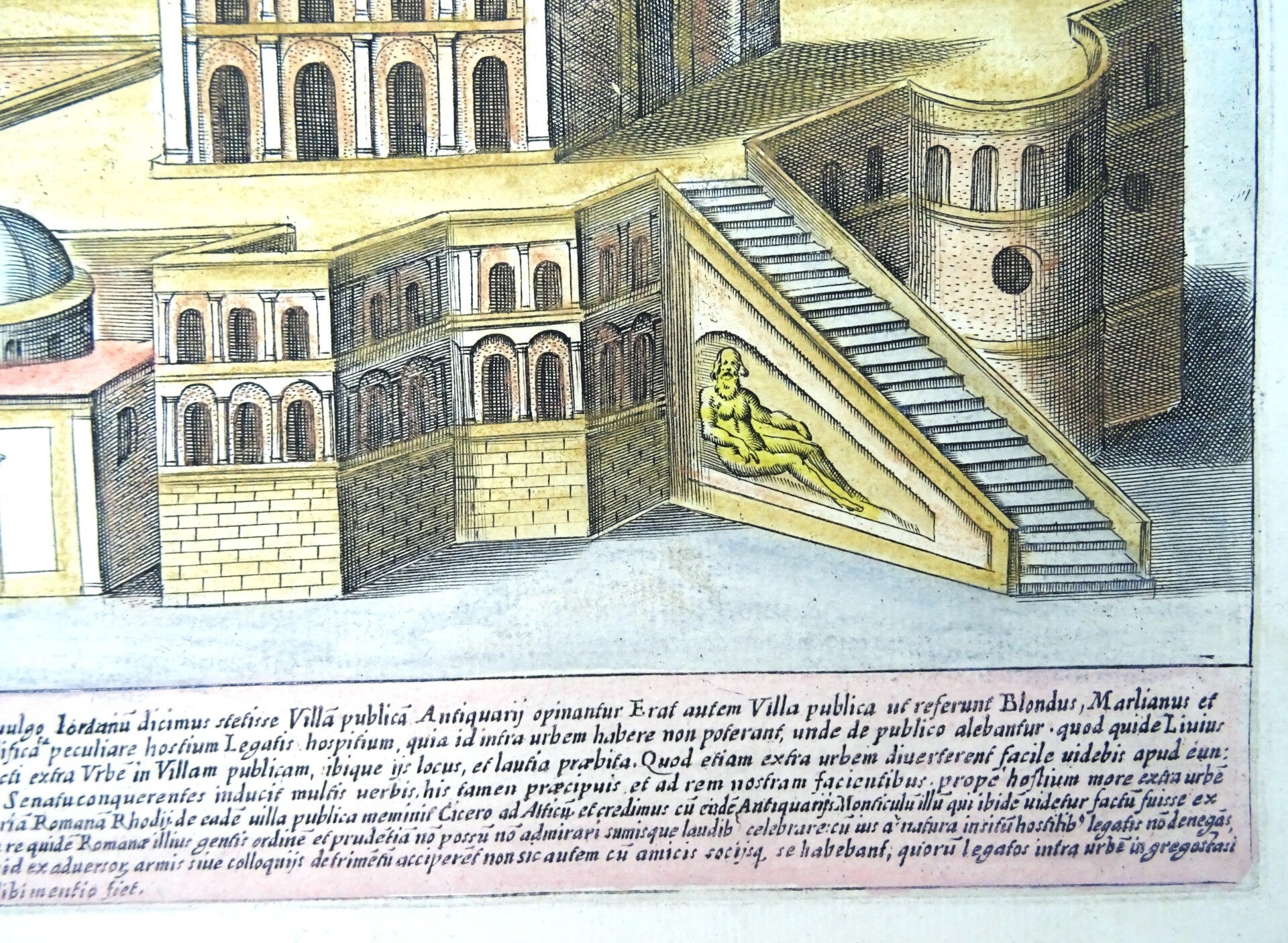
Two views of the building in Rome as they were in Antiquity.
1. Castra Praetoria were the ancient barracks (castra) of the Praetorian Guard of Imperial Rome. According to the Roman historian Tacitus, the barracks were built in 23 AD by Lucius Aelius Sejanus, the praetorian prefect serving under the emperor Tiberius, in an effort to consolidate the several divisions of the guards. The barracks were erected just outside the city of Rome and surrounded by solid masonry walls, measuring a total of 440 by 380 metres (1,440 ft × 1,250 ft). Three of the four sides of the walls were later incorporated in the Aurelian Walls, and parts of them are clearly visible today. The adjacent city district Castro Pretorio is named after the barracks.
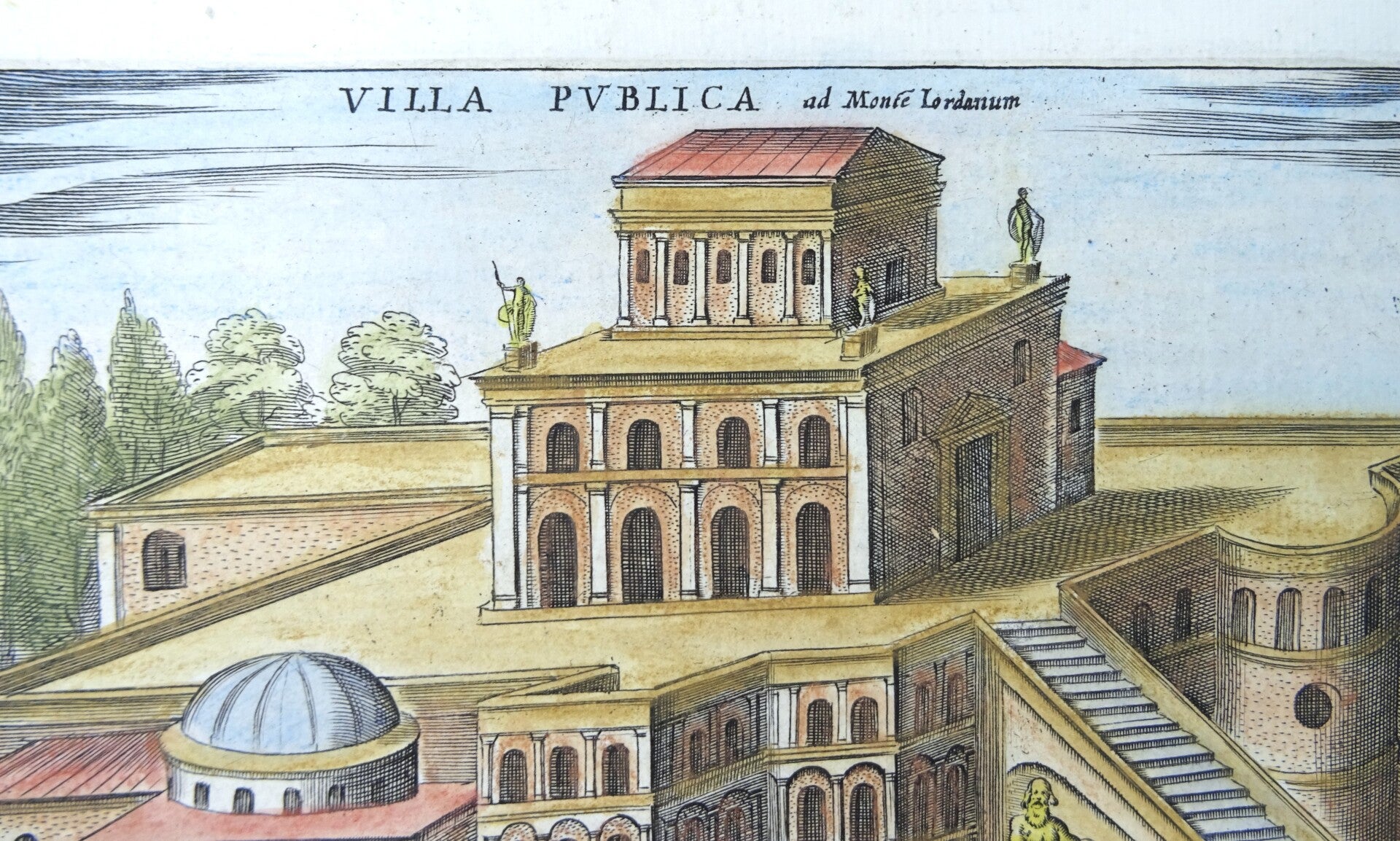
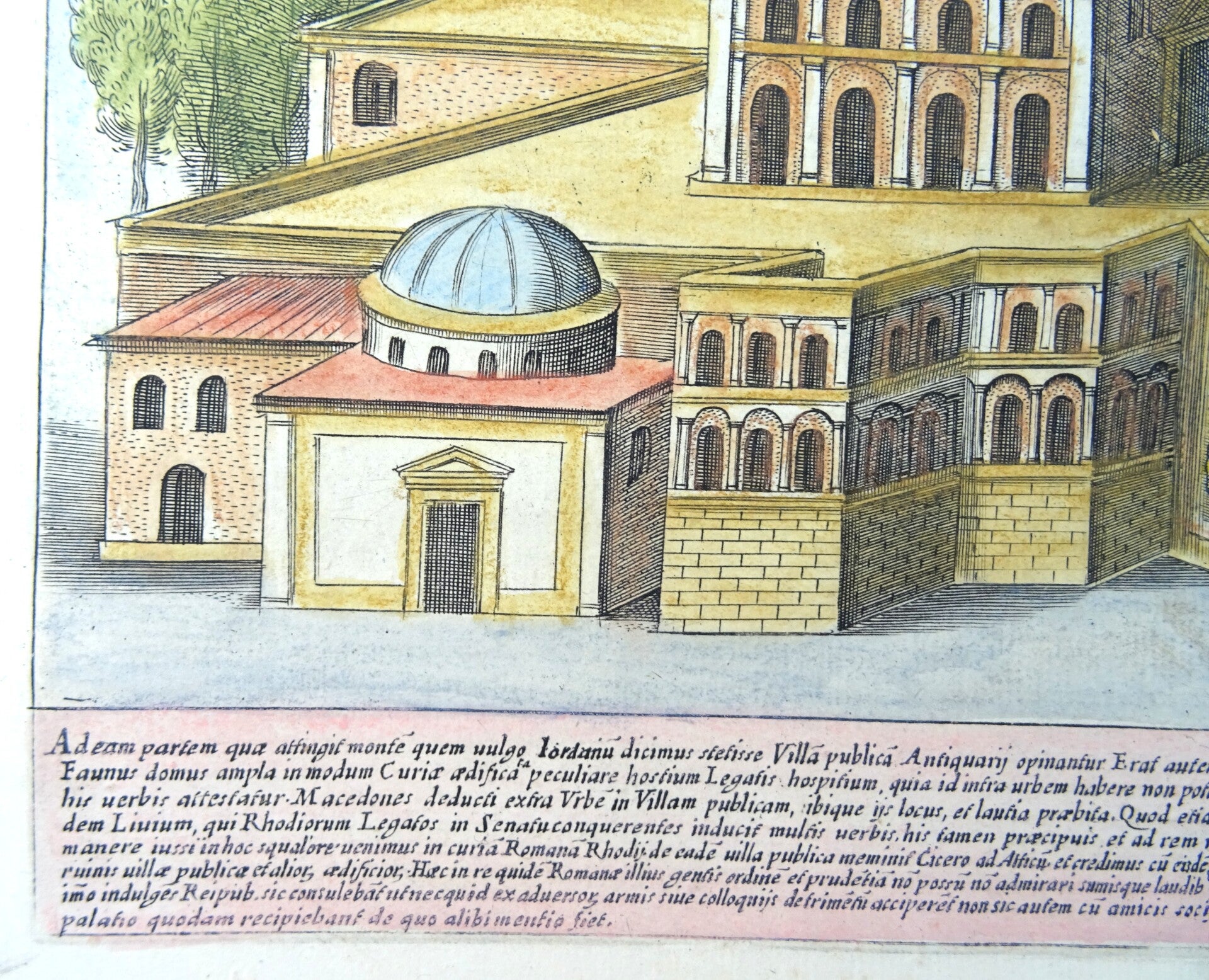
2.The Villa Publica on the Monte Giordano shows a highly idealized, symmetrical classical building featuring a prominent dome and majestic arched gateways.The Ancient Villa Publica: In historical reality, the Villa Publica was a large public building complex erected in 435 BC on the Campus Martius. It served as the central headquarters for Roman censors to compile the census, levy military forces, and receive foreign ambassadors.The Monte Giordano Location: Lauro's print specifically identifies the structure as "Villa Publica ad Monte Iordanum". Monte Giordano is a small artificial mound in Rome's Rione Ponte district, created over centuries by piled-up debris and river silt near the Tiber River.Topographical Misconceptions: Placing the Villa Publica on Monte Giordano reflected Renaissance-era theories propagated by antiquarians like Onofrio Panvinio. They believed that the ancient triumphal route (Via Triumphalis) wound past this specific hill on its way to the Theater of Pompey. Today, the hill is famous for housing the sprawling Palazzo Taverna, an architectural fortress originally built by the Orsini family.
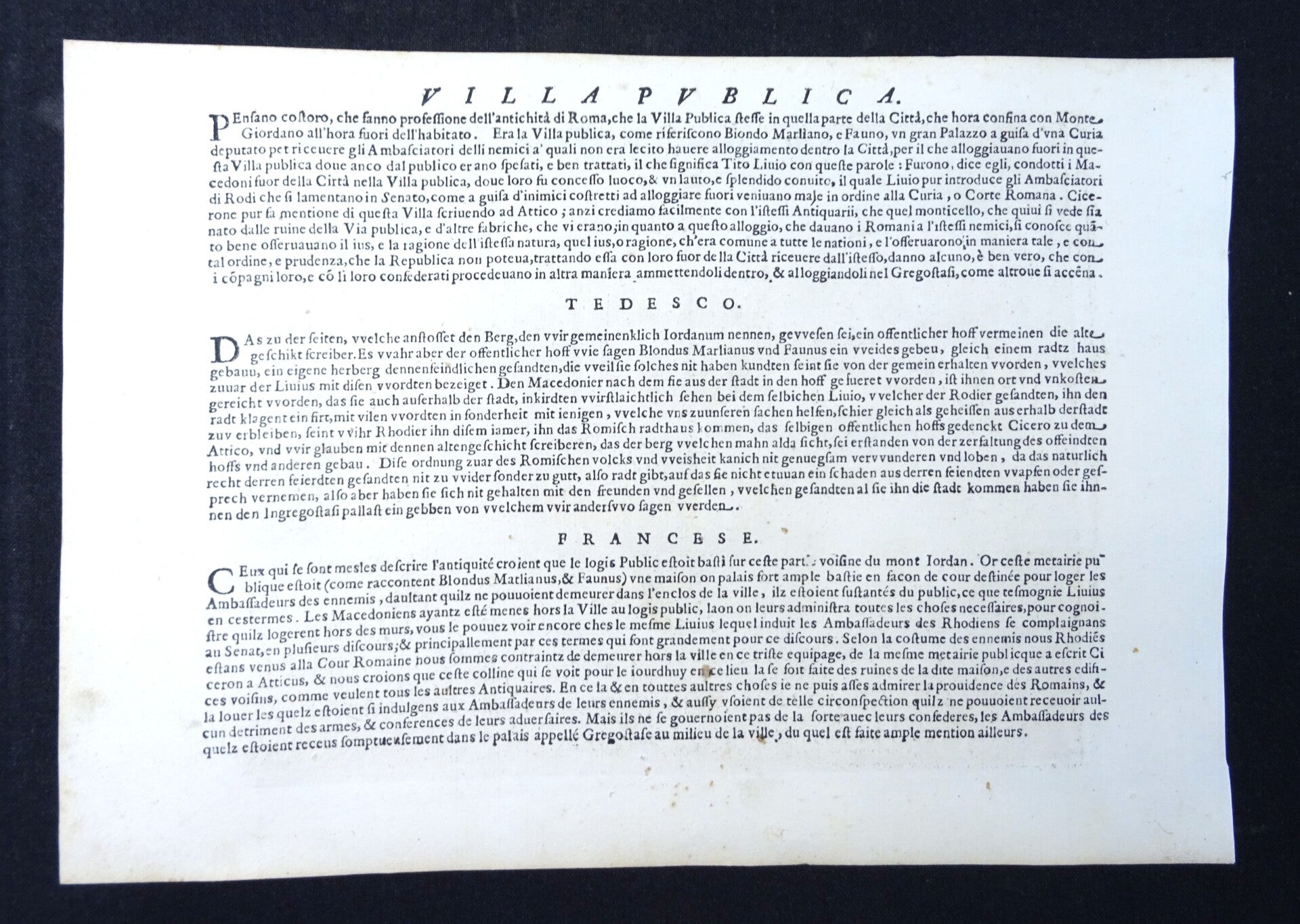
The engravings are taken from ´Splendore dell antica e moderna Roma ...´, published in Rome in 1624 (first edition started being published in parts from 1612 onwards). The view is explained in Latin text below the engraving.
Giacomo Lauro (or Jacobus Laurus) was an engraver, printer and print publisher. Active in Rome from 1583, when described as 'intagliatori di rame' (Ashby p.362). 17 March 1598 he applied for and was granted a 10-year papal privilege for an unspecified number of unnamed religious prints (Leuschner). Giacomo Lauro’s place and date of birth are unknown, although his signature “Jacobus Laurus Romanus” seems to indicate that the artist was proudly born Roman.
Lauro's earliest dated prints are of 1582 (Martyrdom of St Catherine), and carry the address of C. Duchetti (Ashby, 1926-27, p.362). He also worked for Panzera, c.1589 (Bertolotti). From 1590 he tried to establish himself as a publisher of his own work . He acquired and restored old plates, published copies of classic prints as Marcantonio's St Paul preaching (B.XIV.50.44). He accepted commissions, as the map of Rocca Contrada, 1594 (Anselmi). He probably acquired plates from Jacob Matham which he published in 1598 (Widerkehr). His 'Antiquae Urbis Splendor' was published in parts from 1612. In the volumes issued in 1614 and 1615 Lauro refers to having worked on the study of antiquity for 28 years which would mean that he began this work about 1586 (see Ashby, 1926-27, p.362).
Excellent. Strong paper. Ample margins.
Images 18x23cm, pages 22x32cm