

Italy, Rome, Villa Medici, Monte Pincio, Giacomo Lauro, 1625, Del Seren. Gran Duca di Toscana Palazzio Et Giardino nel Monti Pincio in Roma
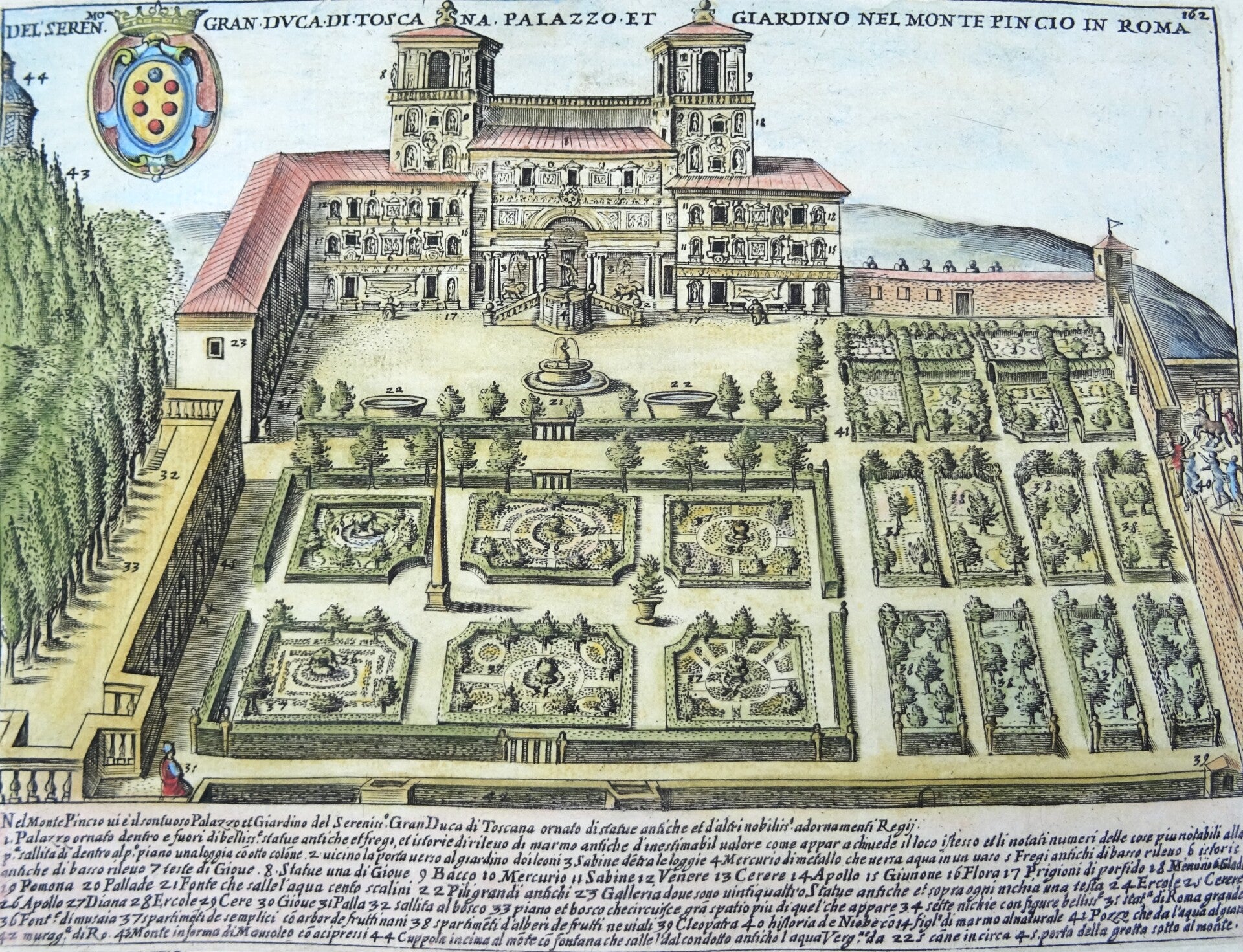
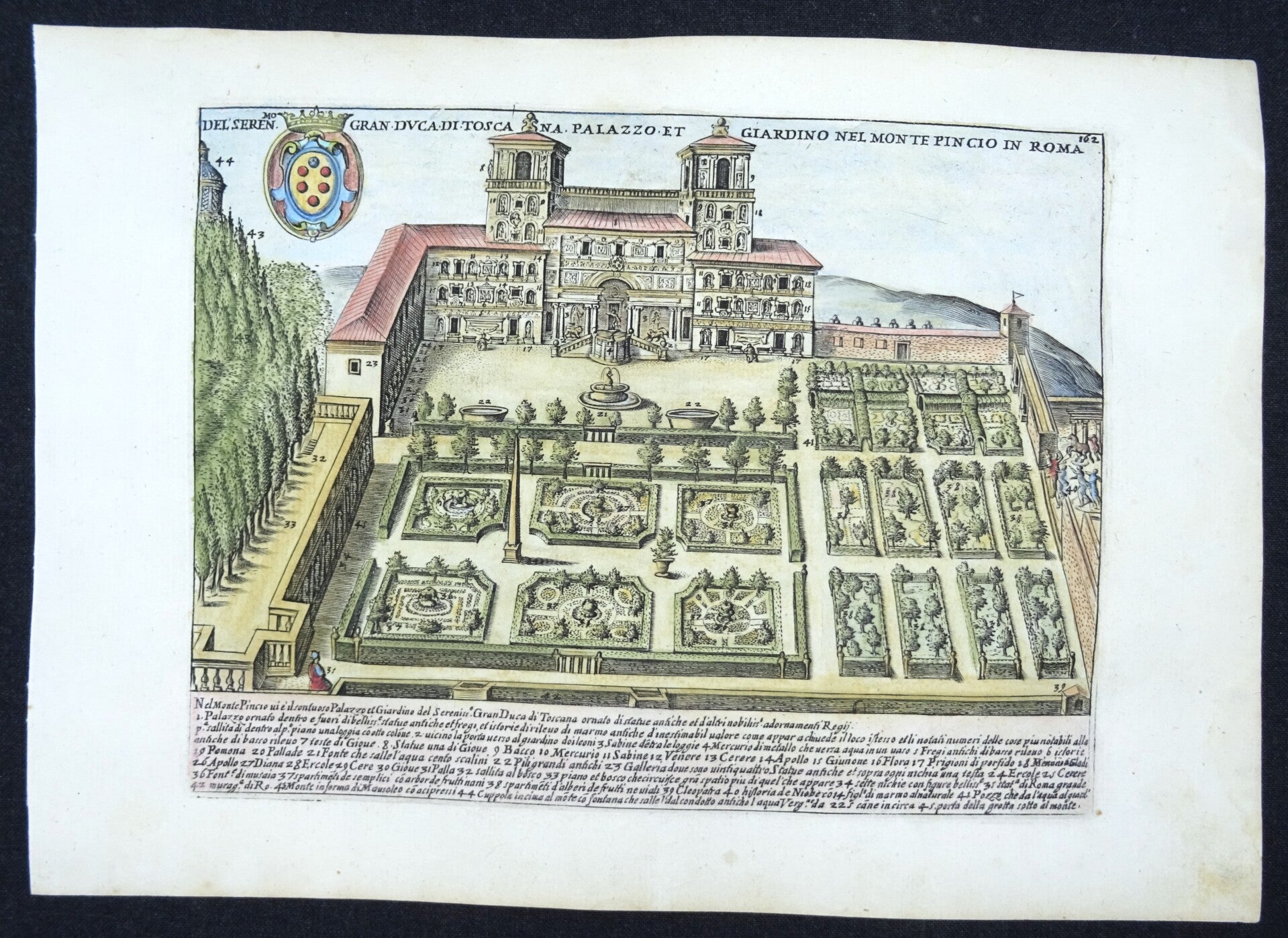
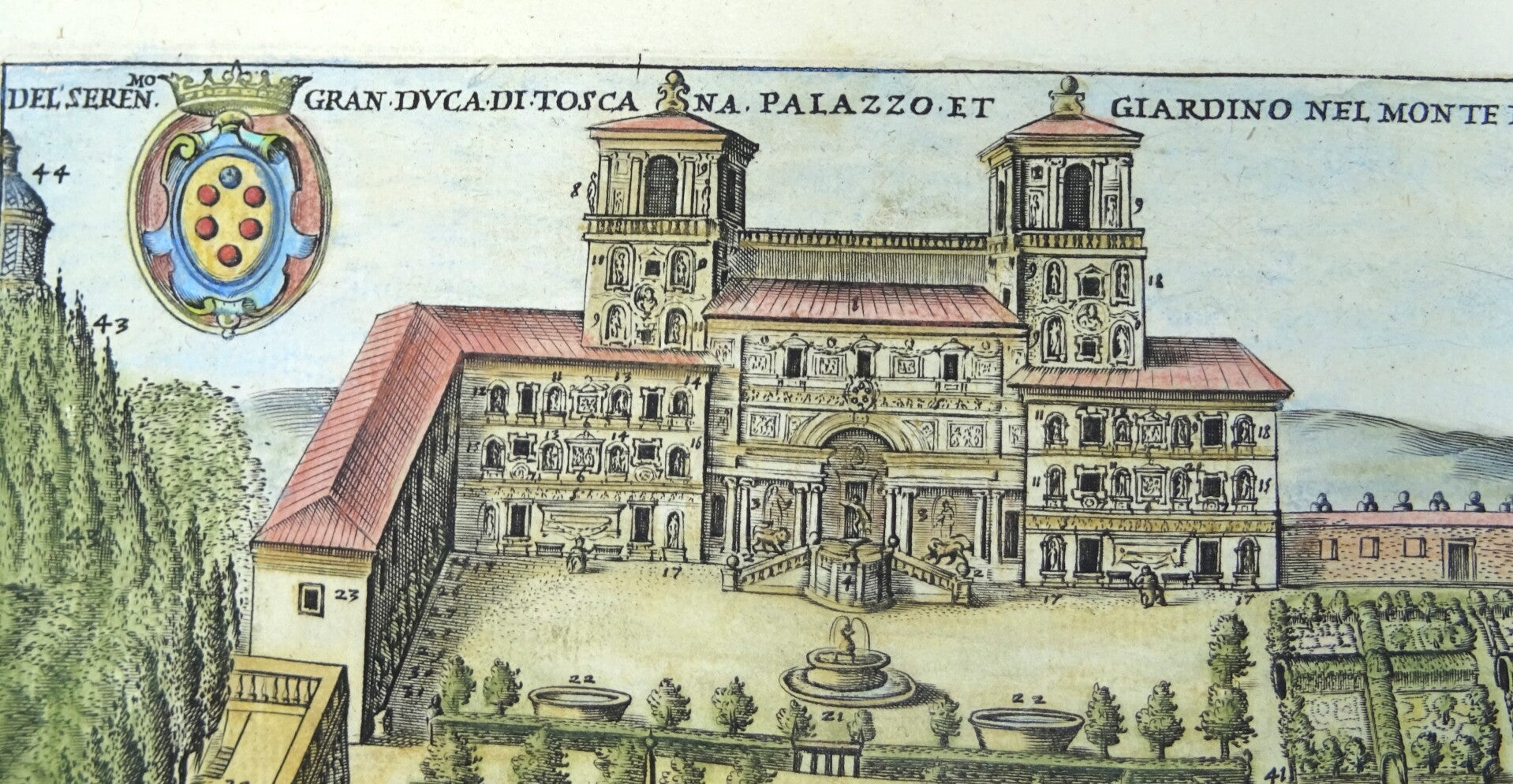
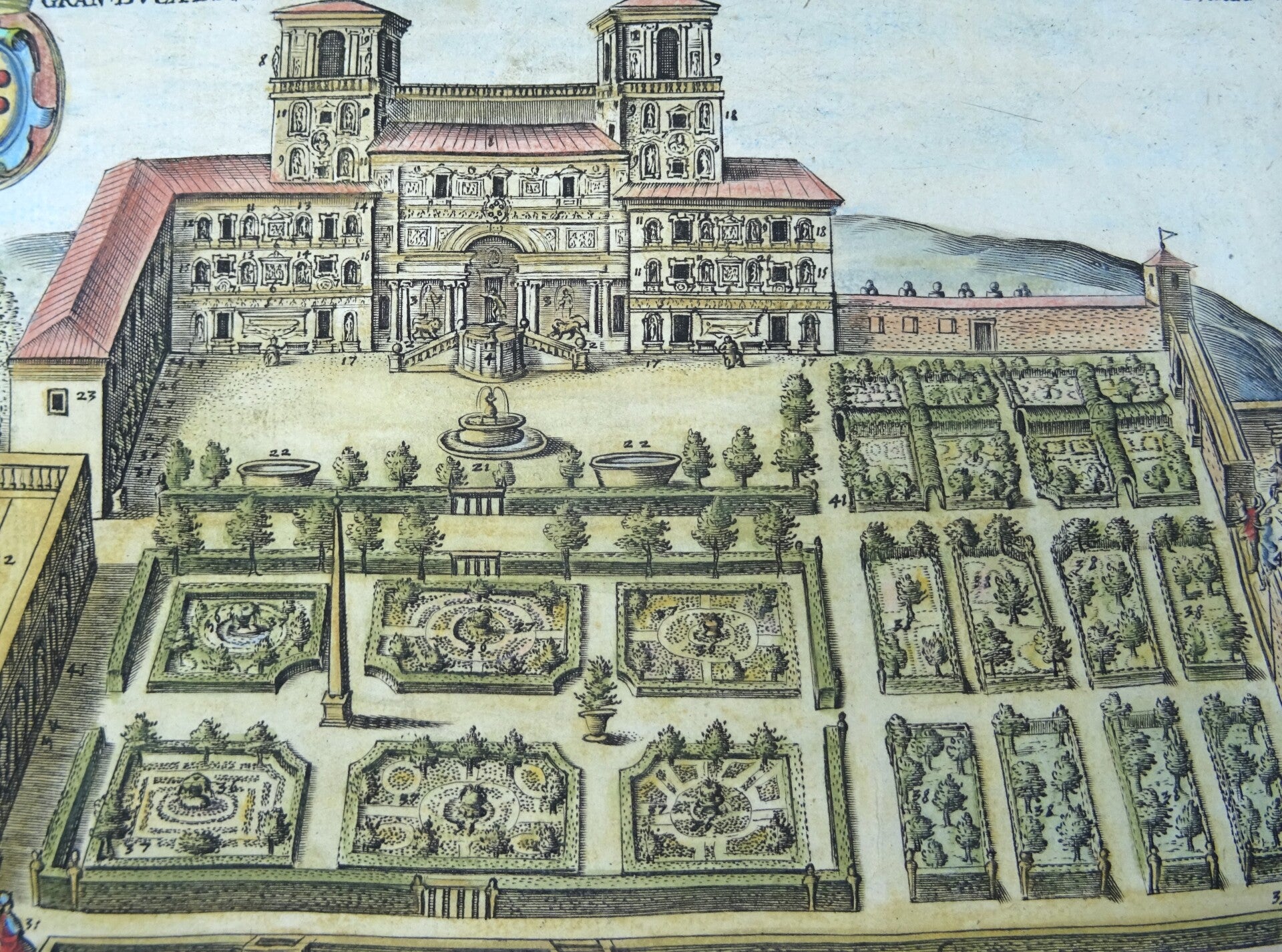
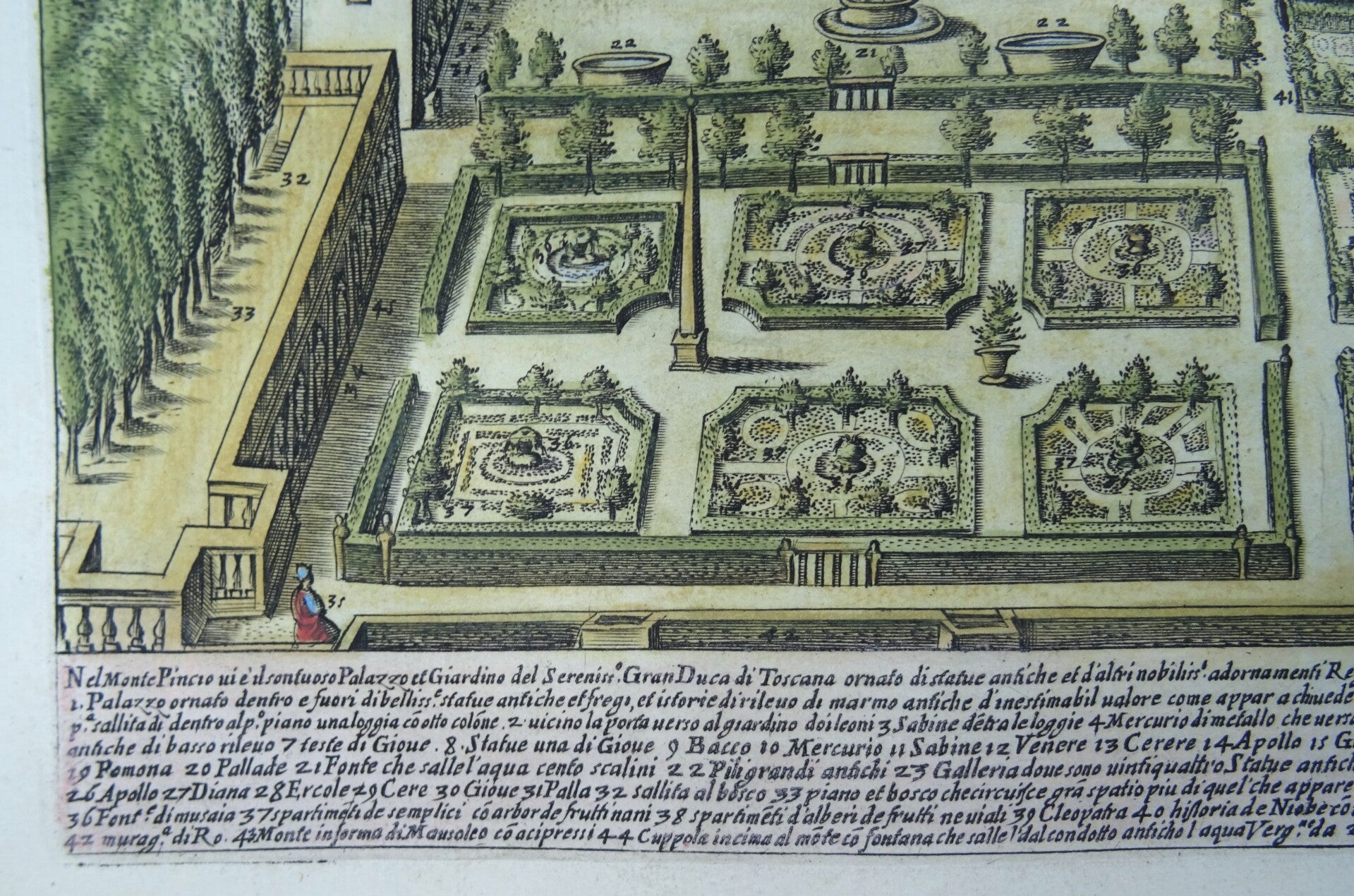
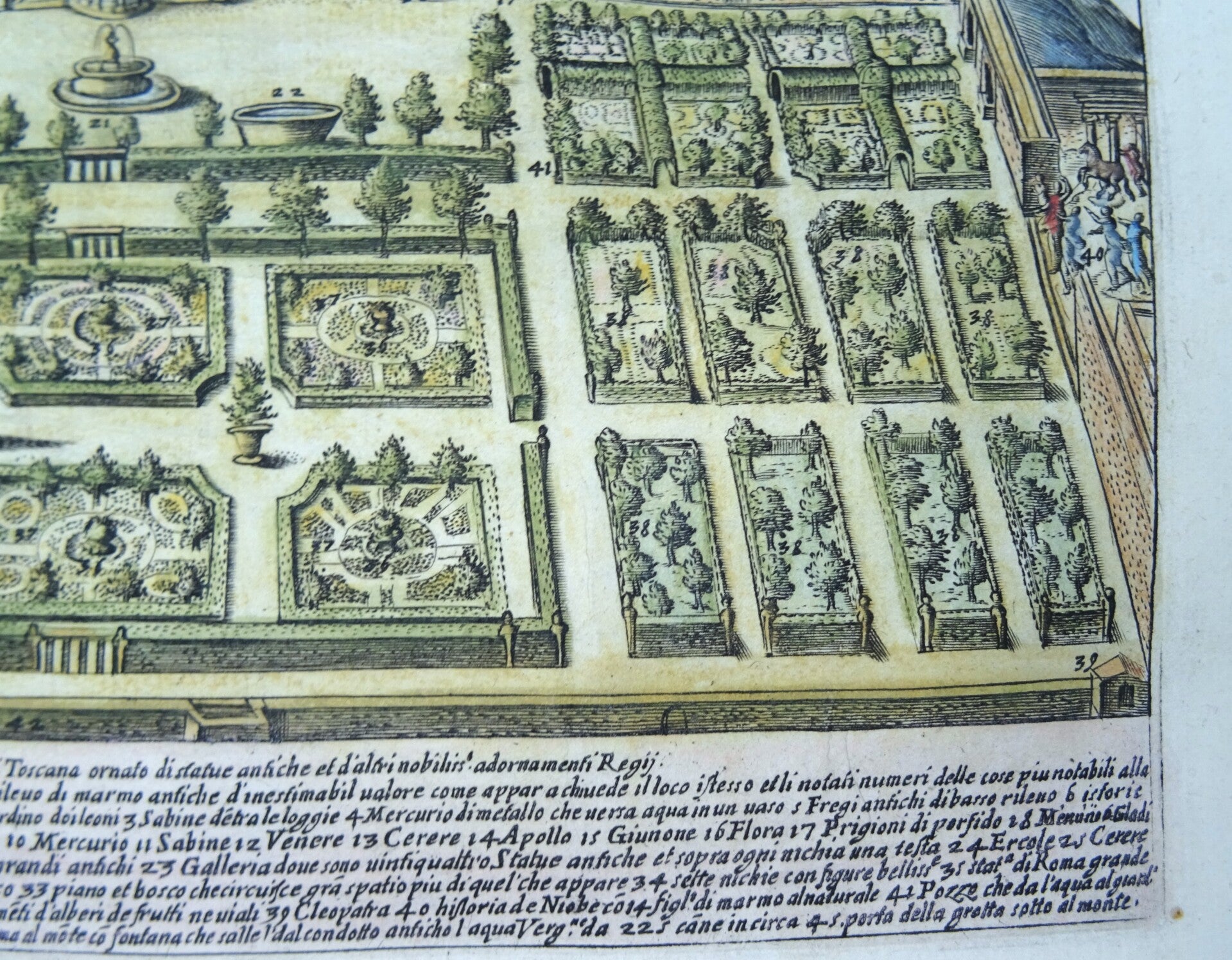
View of the palace and garden of the Grand Duke of Tuscany (Villa Medici) on the Monte Pincio in Rome. It is a sixteenth-century Italian Mannerist villa and an architectural complex with 7-hectare Italian garden, contiguous with the more extensive Borghese gardens, on the Pincian Hill next to Trinità dei Monti in the historic centre of Rome, Italy.
The garden of the Villa Medici at Monte Pincio were created in the late 1500s on the site of the ancient gardens of the Acilians near the field of Mars. Cardinal Ferdinando de' Medici, bought the villa and land in 1576. He then enlarged the garden on the north-east side by adding a piece of ground that had belonged to Catherine de Medici. He brought the villa and garden close to its present state. This garden design included antique statues and an obelisk. The earliest drawings, such as this one of Lauro, show the square garden bed design and fountain. Lauro´s drawing has a numbered key to many of the sculptures which Cardinal Ferdinando de' Medici bought in 1584 bought from the Palazzo Valle.
The engraving is taken from ´Splendore dell antica e moderna Roma ...´, published in Rome in 1624 (first edition started being published in parts from 1612 onwards). The view is explained in Latin text below the engraving.
Giacomo Lauro (or Jacobus Laurus) was an engraver, printer and print publisher. Active in Rome from 1583, when described as 'intagliatori di rame' (Ashby p.362). 17 March 1598 he applied for and was granted a 10-year papal privilege for an unspecified number of unnamed religious prints (Leuschner). Giacomo Lauro’s place and date of birth are unknown, although his signature “Jacobus Laurus Romanus” seems to indicate that the artist was proudly born Roman.
Lauro's earliest dated prints are of 1582 (Martyrdom of St Catherine), and carry the address of C. Duchetti (Ashby, 1926-27, p.362). He also worked for Panzera, c.1589 (Bertolotti). From 1590 he tried to establish himself as a publisher of his own work . He acquired and restored old plates, published copies of classic prints as Marcantonio's St Paul preaching (B.XIV.50.44). He accepted commissions, as the map of Rocca Contrada, 1594 (Anselmi). He probably acquired plates from Jacob Matham which he published in 1598 (Widerkehr). His 'Antiquae Urbis Splendor' was published in parts from 1612. In the volumes issued in 1614 and 1615 Lauro refers to having worked on the study of antiquity for 28 years which would mean that he began this work about 1586 (see Ashby, 1926-27, p.362).
Excellent. Never folded. Strong paper. Ample margins.
Image 18x23cm, page 22x32cm