

Rome, War Column, Carmentalis Gate, G. Lauro, 1625, Columna Bellica ad Portam Carmentalem

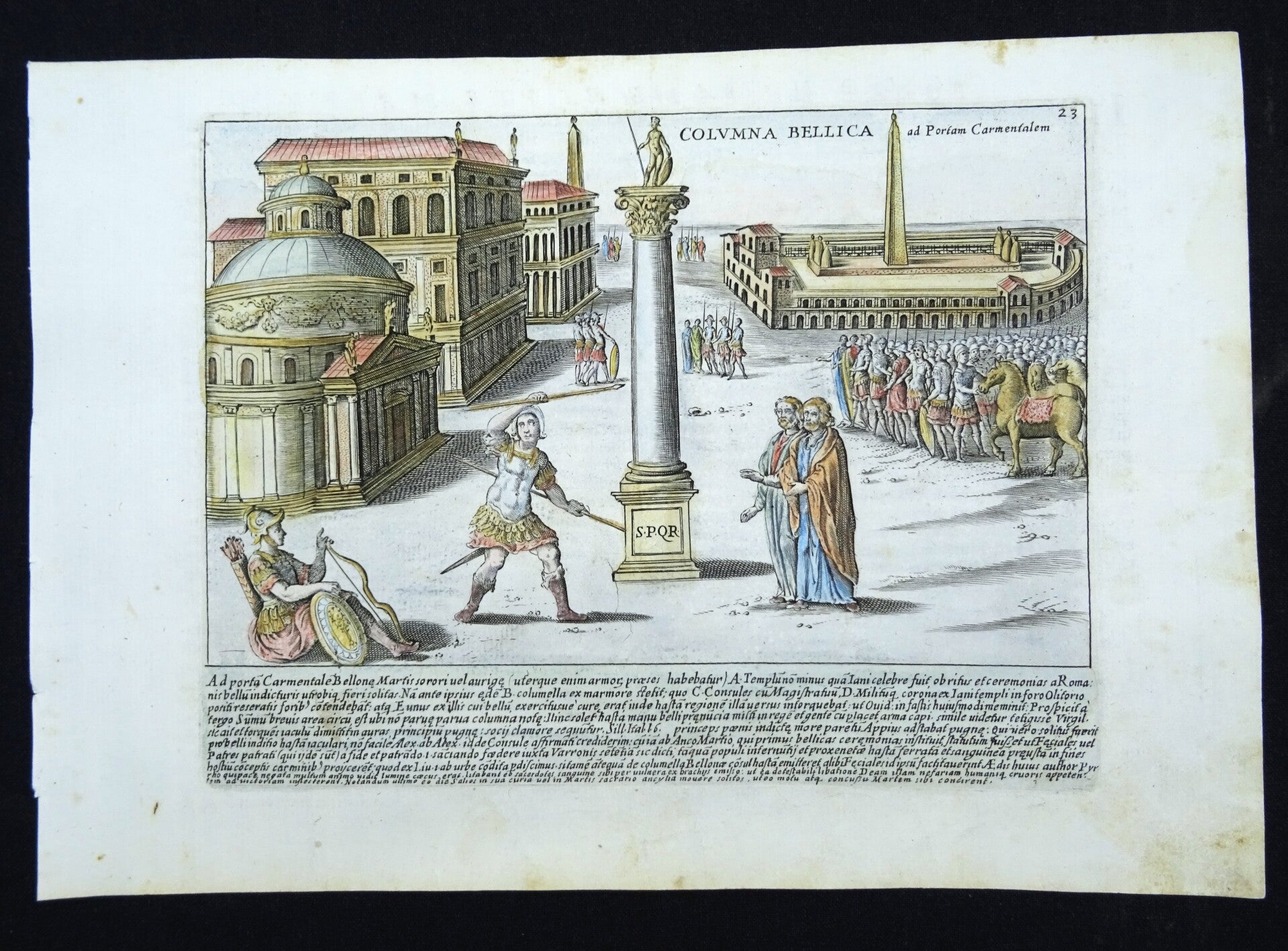
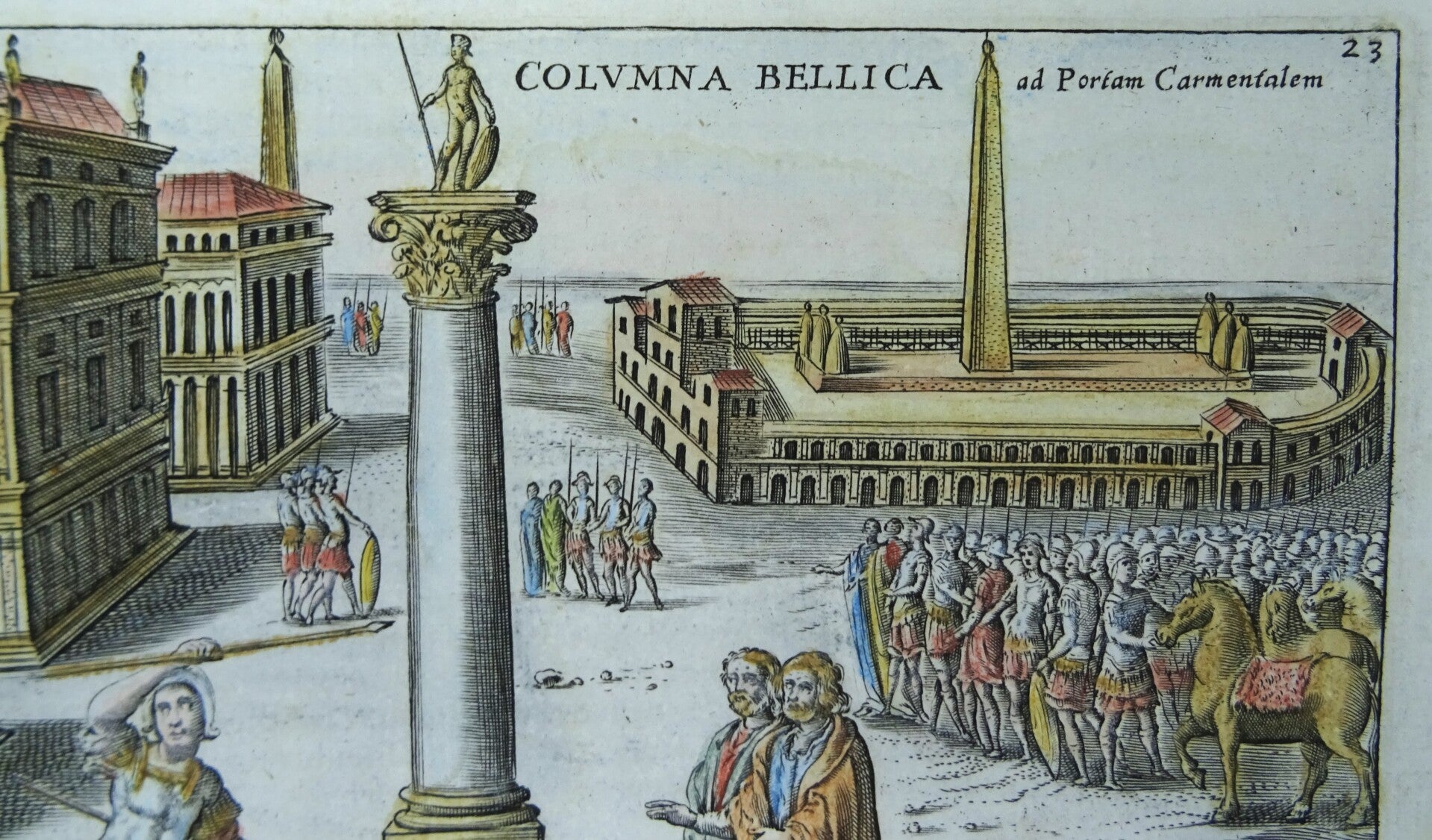
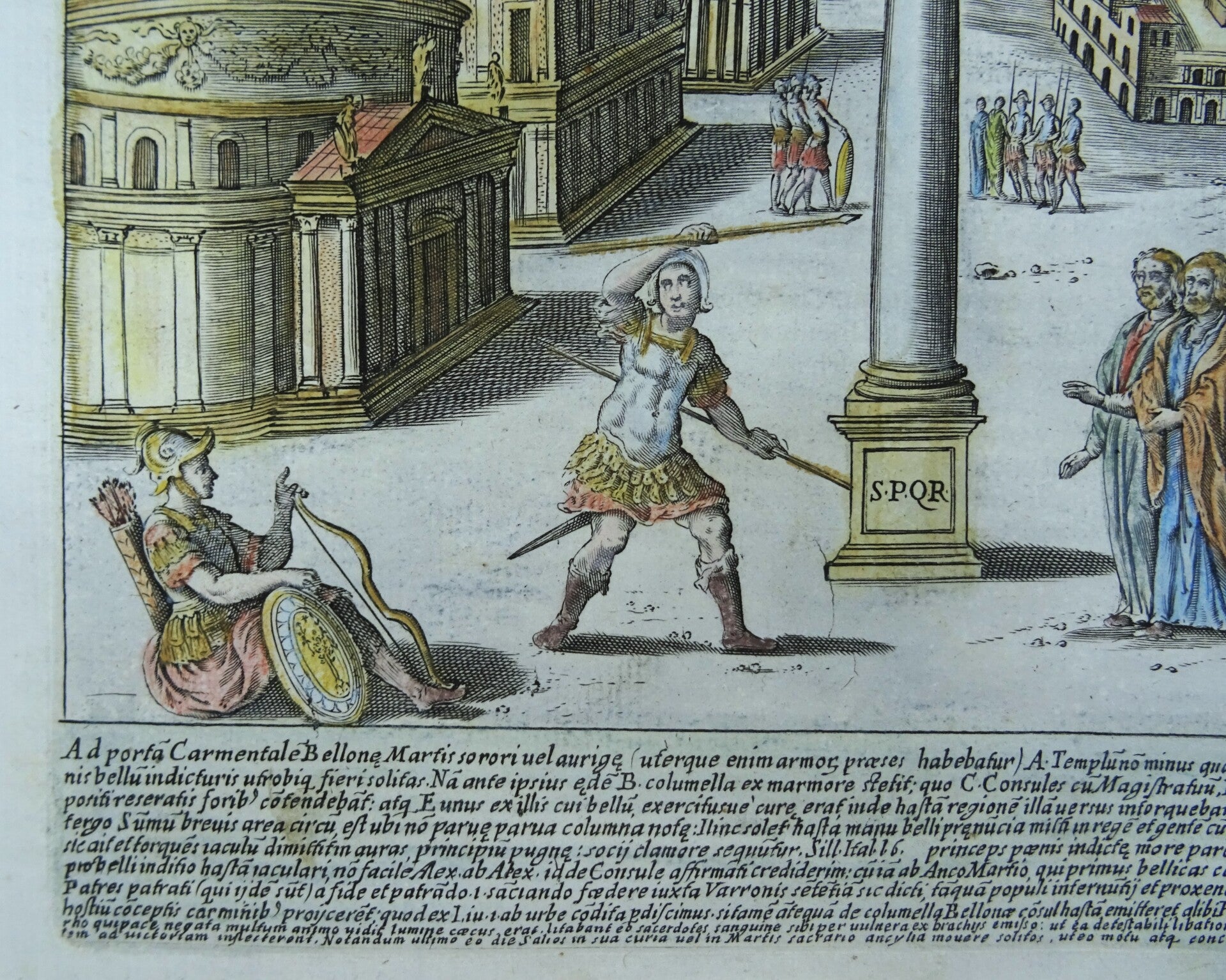

View of the ´War Pillar´ at the Carmentalis Gate (Latin name: Porta Carmentalis), was a double gate in the Servian Walls of ancient Rome. It stood on the bank of the Tiber River at the hight of the Island in the Tiber (Insula Tiberina).
The Columna Bellica stood near the Temple of Bellona. They were part of the buildings that made up Circus Flaminus. The column was used by Roman soldiers who would hurl a spear in the direction of the county with which they were about to wage war.
The engraving is taken from ´Splendore dell antica e moderna Roma ...´, published in Rome in 1625 (first edition started being published in parts from 1612 onwards). In a later edition there were engravings added of Rome in the 17th century, made by Giovanni Giacomo De Rossi.
Giacomo Lauro (or Jacobus Laurus) was an engraver, printer and print publisher. Active in Rome from 1583, when described as 'intagliatori di rame' (Ashby p.362). 17 March 1598 he applied for and was granted a 10-year papal privilege for an unspecified number of unnamed religious prints (Leuschner). Giacomo Lauro’s place and date of birth are unknown, although his signature “Jacobus Laurus Romanus” seems to indicate that the artist was proudly born Roman.
Lauro's earliest dated prints are of 1582 (Martyrdom of St Catherine), and carry the address of C. Duchetti (Ashby, 1926-27, p.362). He also worked for Panzera, c.1589 (Bertolotti). From 1590 he tried to establish himself as a publisher of his own work . He acquired and restored old plates, published copies of classic prints as Marcantonio's St Paul preaching (B.XIV.50.44). He accepted commissions, as the map of Rocca Contrada, 1594 (Anselmi). He probably acquired plates from Jacob Matham which he published in 1598 (Widerkehr). His 'Antiquae Urbis Splendor' was published in parts from 1612. In the volumes issued in 1614 and 1615 Lauro refers to having worked on the study of antiquity for 28 years which would mean that he began this work about 1586 (see Ashby, 1926-27, p.362).
Excellent. Some minimal stains and age browning. Never folded. Strong paper. Ample margins.
Image 18x23cm, page 22x32cm