

Brazil, Alagoas, Maceió, Montanus / Van Meurs, 1671, Alagoa ad Austrum.

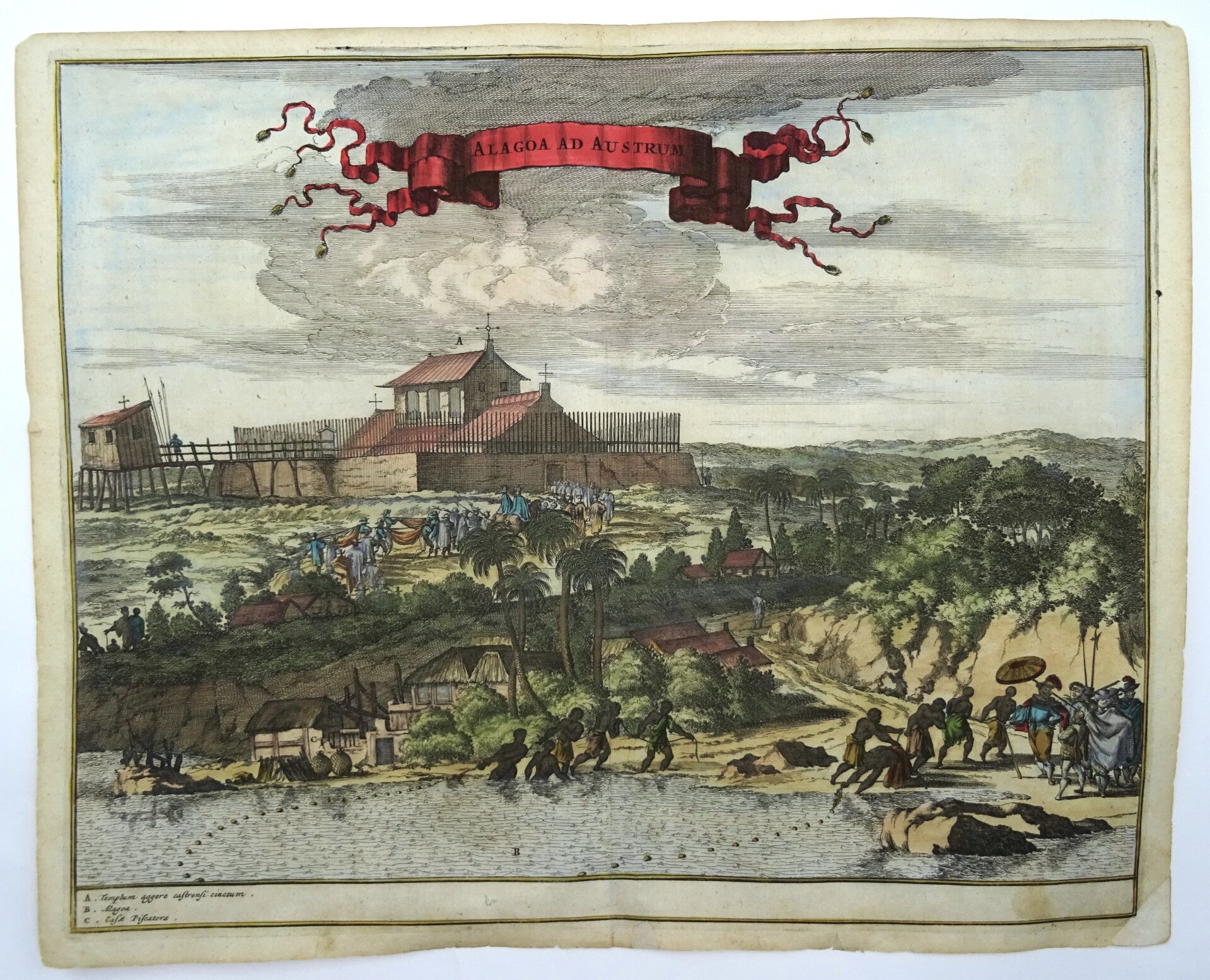
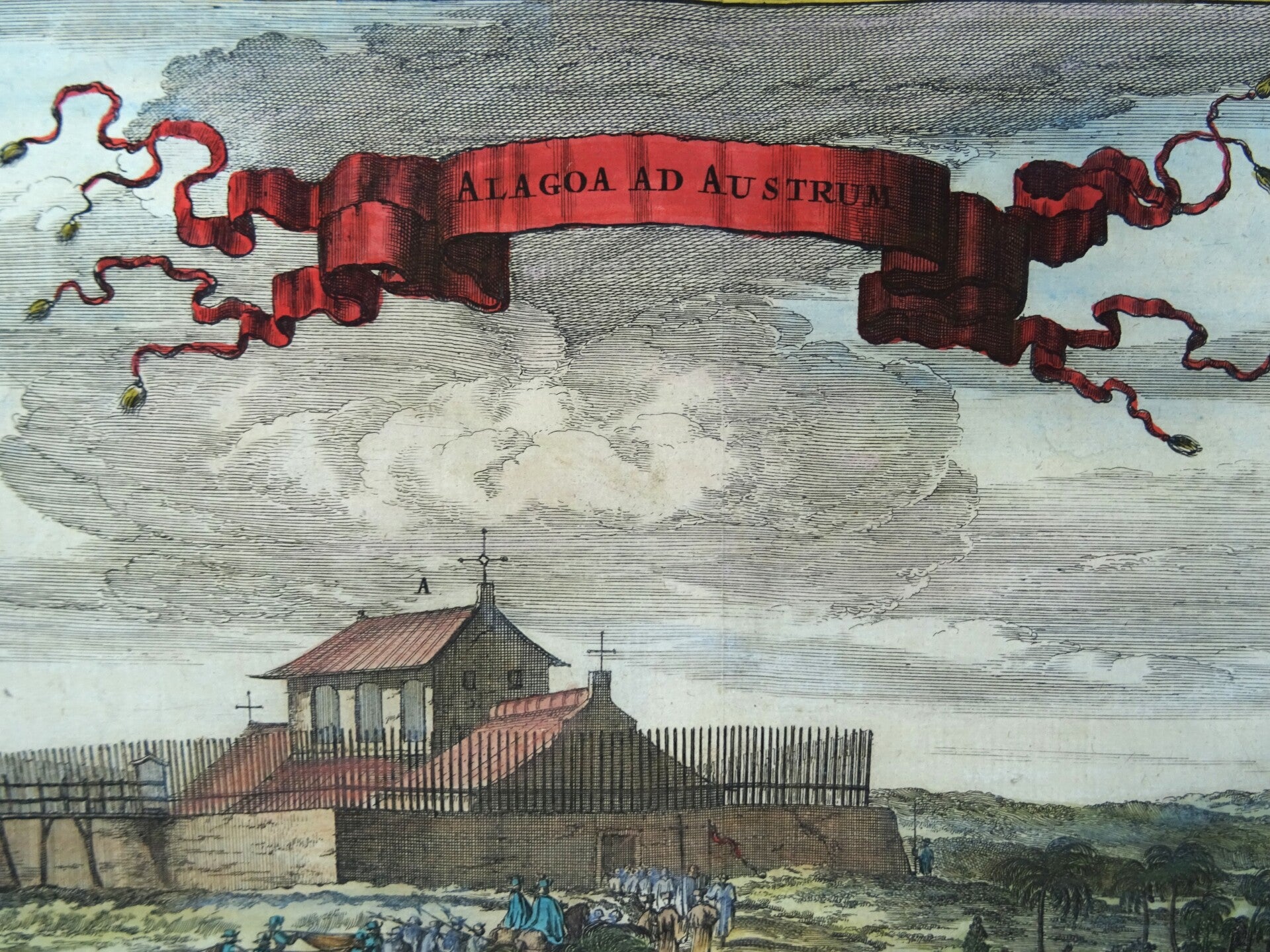
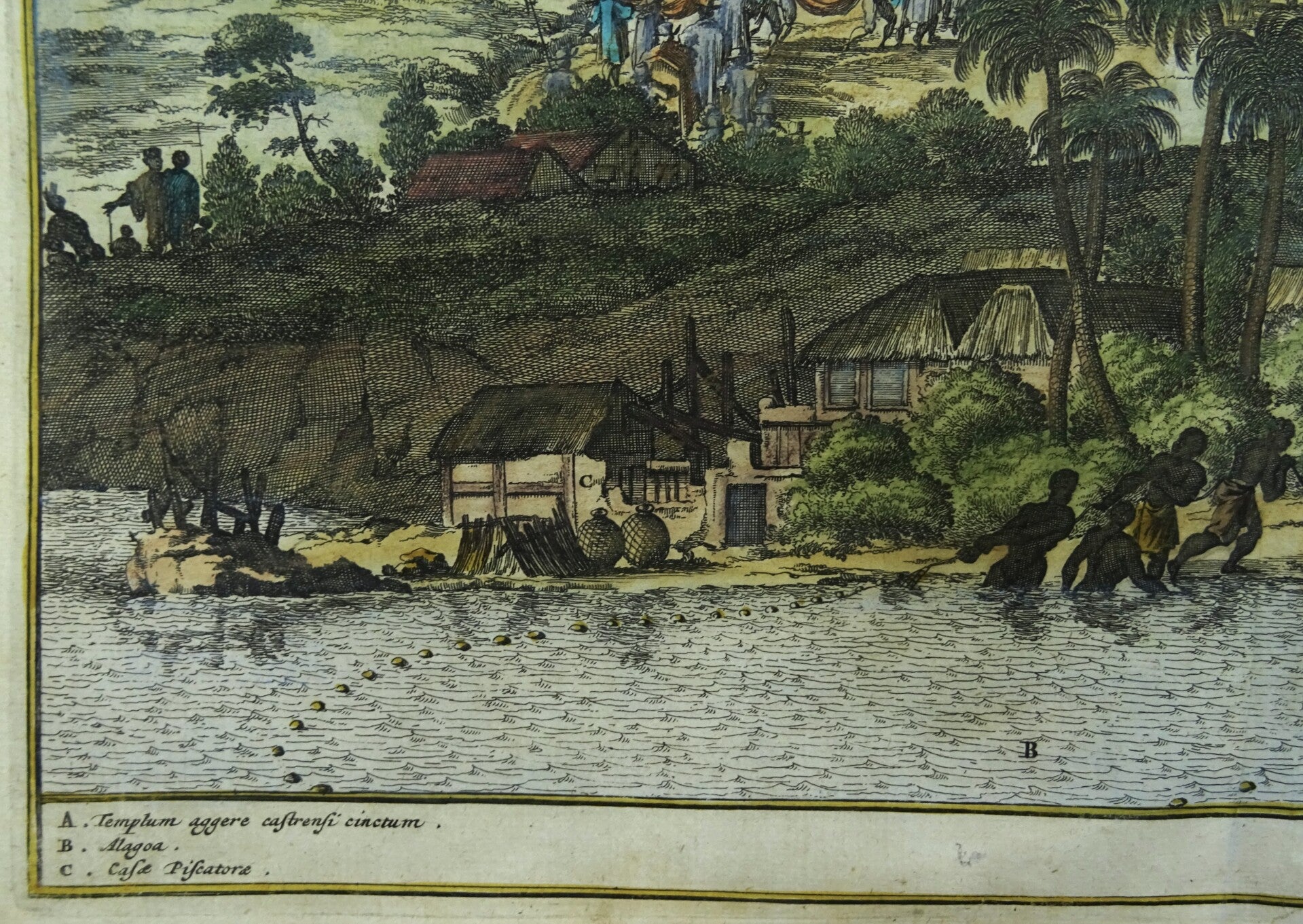
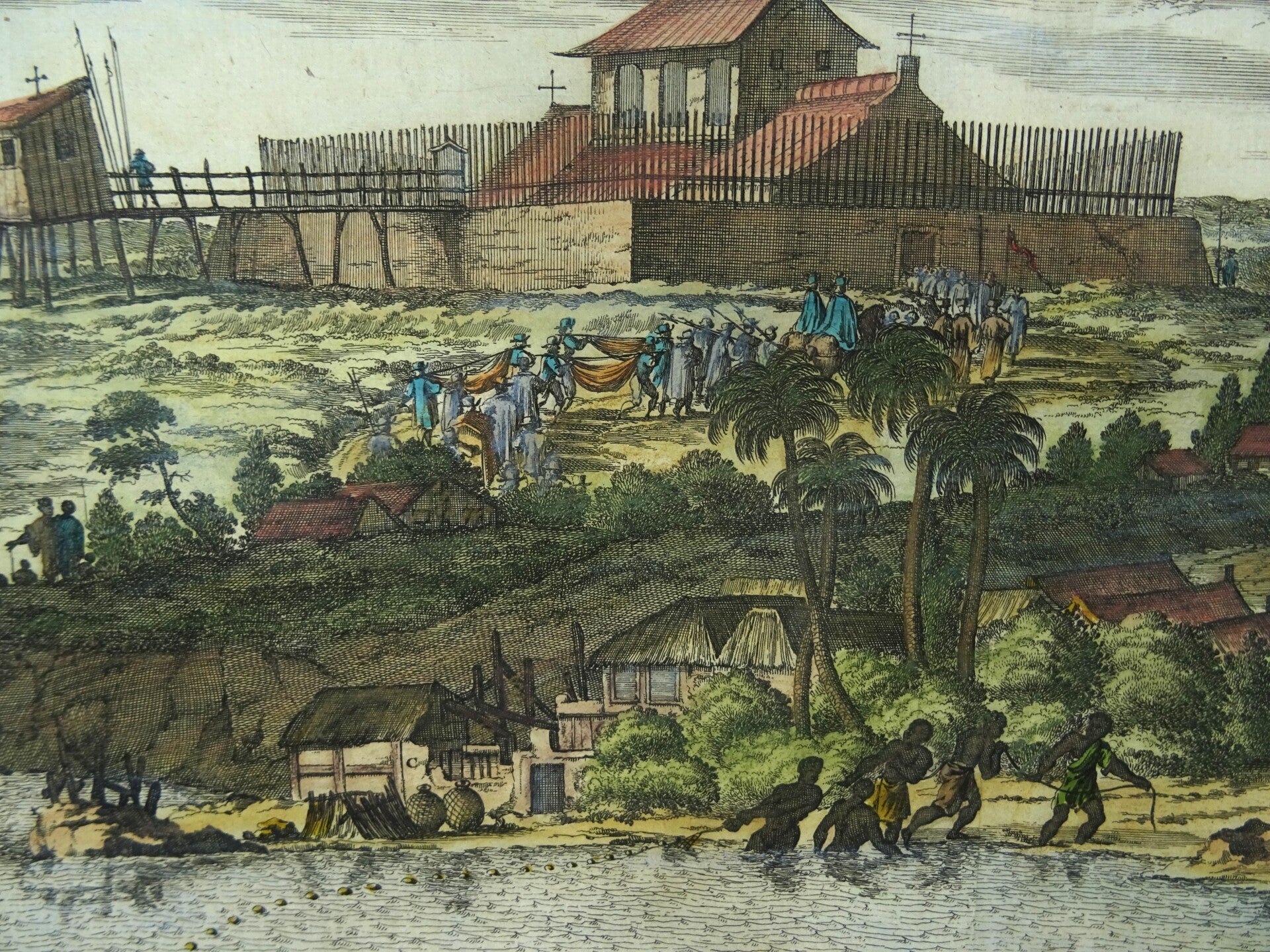
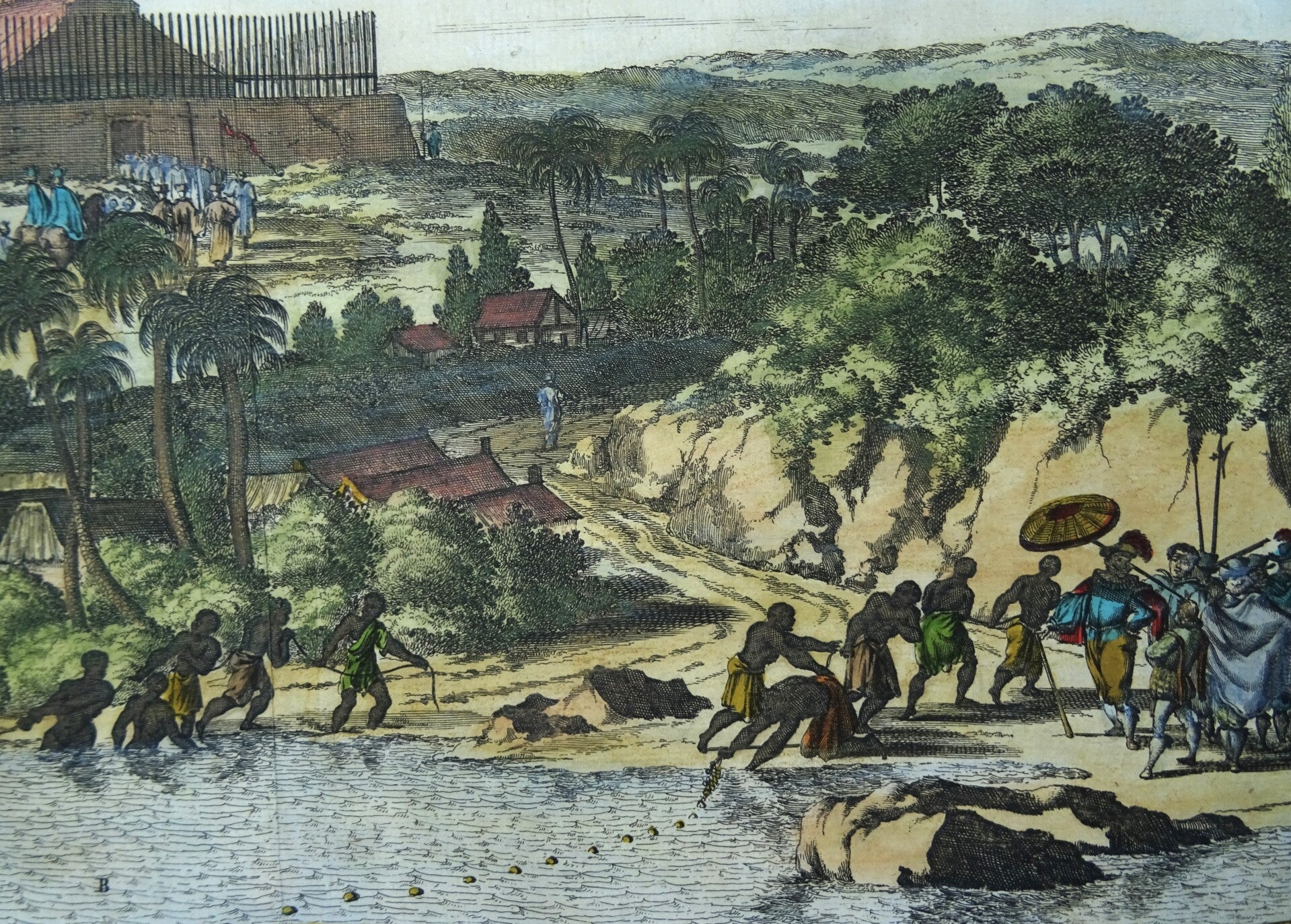
A large view of Maceió in the state of Alagoas, in the Northeast of Brazil. It shows the fortress with native fishermen in the foreground and a religious procession in the background.
A small letter key at the bottom left identifies major sites.
Maceió is the capital and the largest city of the coastal state of Alagoas, Brazil. The name "Maceió" is an Indigenous term for a spring. Most maceiós flow to the sea, but some get trapped and form lakes ("lagoas", in Portuguese).
This detailed engraving is inspired by a painting by Post executed in 1639. This view appeared in John Ogilby’s seminal atlas "America: Being the Latest, and Most Accurate Description of the New World," published in London in 1671. Ogilby’s work is an English translation of Arnoldus Montanus’ "Die Nieuwe en onbekende Weereld. . . ," which was produced in Amsterdam earlier the same year. Considered the first encyclopedias of the Americas, both texts are richly illustrated with maps, views and portraits.
In the late 1630’s Holland attempted to reassert its claim over Brazil by establishing a series of forts along the coastline. It is one of the best documented colonies because of the expedition led by Prince Maurits of Nassau, who attempted to assemble an intellectual court in the New World. He brought with him a group of highly accomplished artists, mapmakers, and scientists to record the mysteries of Brazil. They included the celebrated painter Frans Post, and the astronomer George Markgraf, who produced the first serious study of the southern sky. Post painted a wealth of images of the Brazilian landscape and the surrounding vegetation and wildlife. His works are some of the earliest European paintings of Brazil and were eagerly reproduced in print by Dutch engravers.
Good condition. Some age browning and a few small stains and repairs in the margin, not affecting the image. Otherwise excellent.
Image 27x33,5cm, page 31x37,5cm